Showing posts with label soft tissue. Show all posts

Sunday, 15 January 2023

Hummingbirds are millions of years old


Image curtesy of Jerome Gawe. 

Joel Kontinen

A loss pf a gene in  hummingbirds led to increased muscle energy, according to Darwinists. They know little of its purported evolution,   

But they say that Osipova et al,  found that a gluconeogenic muscle enzyme, FBP2, was lost as hovering flight evolved. They are assured that this loss of a gene can be adaptive.

Some researchers have found  soft tissue in a 47  million year old bird. This would call for questioning the evolutionary dogma of millions of years.

Source:  

Vignieri, Sacha. 2023.  Loss leads to gain. Science 12 January. 


Saturday, 23 October 2021

Evolutionists claim that pterosaurs evolved their skills to fly

Image courtesy of Alex Boersma.

Joel Kontinen 

Michael Pittman and colleagues state that pterosaurs evolved pterosaur a muscular wing–body junction providing multifaceted flight performance benefits. They say that these animals  lived for over 160 million years but we cannot be sure how they were such sturdy fliers  

This shows how scientist through about the word evolution. However, they also said that soft tissues guide the animals in their flight.

This means that they can’t be that old, as soft tissue cannot be millions of years old.  

Source:   

Pittman et al. 2021. Pterosaurs evolved a muscular wing–body junction providing multifaceted flight performance benefits: Advanced aerodynamic smoothing, sophisticated wing root control, and wing force generation Proceedings of the National Academy of Sciences 2 November. 


Thursday, 8 April 2021

Dinosaur DNA Is An Enigma For Evolution


Image courtesy of ABelov2014 , CC BY 3.0.


Joel Kontinen


Paleobiologist Alida Bailleul from the Chinese Academy of Science has become the woman who believes she could be the oldest partially intact DNA ever found in a specimen of the dinosaur Hypacrosaurus..

Now, according to evolution, dinosaurs have to be at least 65 million years old. However, The dinos they sequenced was between 74 and 80 million years old. Actually, dinosaurs DNA and soft tissue  that they were living just recently.

Earlier this year,  scientists announced they'd sequenced DNA from a 1.2-million-year-old mammoth tooth. But it is a long jump to dinosaurs

Source:

 Bowler. Jacinta, 2021, The Trouble with dinosaur bones Science Alert. Science Alert 27 March.


Monday, 8 February 2021

Soft tissue found in ammonite that is taught to be 150 million years old


Image courtesy of Nobu Tamura CC BY 3.0 .

Joel Kontinen


Soft tissue does not  evoke calcified bones orshells.However,  Steven Taylor (University of Liverpool) said, all animals had soft tissue, including the ones 500 million years old.

Now, scientist have found soft tissue OF an ancient cephalopod analyzed in the Swiss Journal of Paleontology. “The term "cephalopod" refers to a type of mollusc that has a prominent head, a collection of arms and tentacles and a symmetrical body structure. They also tend to be very intelligent, regardless of whether we're talking about famous cephalopods like octopuses and squids or their more obscure relatives, the cuttlefish and the nautilus.

The animal is thought to be 150 million years old.

Here’s how an article in Salon describes it:

“THE fossil of an ammonite that had been removed from its shell roughly 150 million years ago was discovered in southern Germany. What is remarkable about this ammonite, however, is that the ammonite's fleshy remains were never picked apart by predators or bacteria, allowing it to be preserved for future scientists' delighted edification. Because this particular ammonite died at the bottom of an oxygen-deprived lagoon, its soft tissue was preserved. 

So, whatever the aga of a fossil, it almost always  has soft tissue,

Source: 

Rozsa, Matthew. 2021, A rare fossil indeed:Scientists find ancient cephalopod with soft tissue still preserved Salon 3 February


Monday, 2 November 2020

Soft Tissue In Dinosaurs Show How They Mated


Current Biology (2016) Psittacosaurus sp. SMF R 4970


Joel Kontinen


When  soft tissue was first noticed in a dinosaur, many evolutionists refused to believe it. Now, soft tissue is becoming an issue many scientists approve of. How about the cloaca, that is a single orifice used for excretion, urination, mating and laying eggs.

”A fossil dinosaur originally discovered in northwestern China is so exquisitely preserved that the shape of its cloaca – the opening used for excretion and mating – is visible for the first time.

The evidence has actually been in plain sight. The psittacosaurus – a kind of early ceratopsian related to Triceratops that lived around   120 million years ago – has been on public display at the Senckenberg Museum of Natural History in Frankfurt, Germany, for over a decade and several scientific papers have already been written about its primitive feathers and colouring.”

Source:

Le Page Michael. 2020. Dinosaur fossil with preserved genital orifice hints how they mated. New Scientist 22 October.


Saturday, 19 September 2020

A Mummified Cave Bear With Soft Tissue Found In Siberia

Image courtesy of North-Eastern Federal University, fair use doctrine. 

Joel Kontinen 

Siberia seems to be a treasure drove for ancient animals. Scientists have found wolves, a burly unicorn and a horse with blood flowing from it and cave lions that were not able to be fossilised despite being 10,000 years old

 Now, they have discovered a mummified cave bear, It has soft tissue, including its fur and even its black nose. 

Reindeer hunters have found the cave bear (Ursus spelaeus) mummy on Bolshoy Lyakhovsky island, in the East Siberian Sea brown bear (U. arctos) and the polar bear (U. maritimus). 

 The article in live science also brought to live the fact that they were there for almost a million years: After living in Eurasia since at least 300,000 years ago, cave bears mysteriously went extinct some 25,000 to 30,000 years ago, Humans likely hunted the bears to extinction, a 2019 study in the journal Scientific Reports found. 

Source: 
Geggel, Laura. 2020. Cave bear mummy discovered in Siberia still has its internal organs, fur and black nose.  Live Science 15 September.

Wednesday, 19 June 2019

Dinosaur Soft Tissue Is Just Bacteria?

.


Joel Kontinen

The Chicago Field Museum of Paleontology has started the war against soft tissue. As first reported by Mary Schweitzer at North Carolina State University, and hundreds after her, dinosaurs were carriers of soft tissue. and Mary Schweitzer has checked her results.

Very carefully.

Bad news, Jurassic Park fans—the odds of scientists cloning a dinosaur from ancient DNA are pretty much zero. That’s because DNA breaks down over time and isn’t stable enough to stay intact for millions of years. And while proteins, the molecules in all living things that give our bodies structure and help them operate, are more stable, even they might not be able to survive over tens or hundreds of millions of years. In a new paper published in eLife, scientists went looking for preserved collagen, the protein in bone and skin, in dinosaur fossils. They didn’t find the protein, but they did find huge colonies of modern bacteria living inside the dinosaur bones.

They did not mention their opponents as creationists, who have whittled away the long agers that make evolution possible.

They museum folks published their results in eLIfe, which writes that it seems exceptional that original proteins could persist for so long.

Soft tissue has been found in dinosaurs, salamanders, dinosaur eggs, an ichthyosaur, an Archaeopteryx feather, mammoth bones and many Cambrian creatures.

Source:

Field Museum of Paleontology, 2019. Dinosaur bones are home to microscopic life. 18 June.

Thursday, 6 December 2018

Soft Tissue From a 180 Million Year Old Ichthyosaur


Image courtesy of Dmitry Bogdanov, CC BY 3.0.


Joel Kontinen

Nature has an interesting article on a 180 million year old ichthyosaur, authored by Mary Schweitzer and 22 other researchers.,

Schweitzer’s university has this to say about the findings:

“Molecular and microstructural analysis of a Stenopterygius ichthyosaur from the Jurassic (180 million years ago) reveals that these animals were most likely warm-blooded, had insulating blubber and used their coloration as camouflage from predators.”

The press release quotes Johan Lindgren:“Both the body outline and remnants of internal organs are clearly visible,” says Lindgren. “Remarkably, the fossil is so well-preserved that it is possible to observe individual cellular layers within its skin.”

“Schweitzer and NC State research assistant Wenxia Zheng extracted soft tissues from the samples and performed multiple, high-resolution immunohistochemical analyses. ‘We developed a panel of antibodies that we applied to all of the samples, and saw differential binding, meaning the antibodies for a particular protein – like keratin or hemoglobin – only bound to particular areas,’ Schweitzer says. ‘This demonstrates the specificity of these antibodies and is strong evidence that different proteins persist in different tissues. You wouldn’t expect to find keratin in the liver, for example, but you would expect hemoglobin. And that’s what we saw in the responses of these samples to different antibodies and other chemical tools.’ ”

Their “results were repeatable and consistent across labs.” The soft tissue here was much older than in Schweitzer’s other discoveries for instance, in A t-rex and a Hadrosaur. It concludes that millions of years can’t be true.

Source:

Peake, Tracey. 2018. Soft Tissue Shows Jurassic Ichthyosaur Was Warm-Blooded, Had Band Camouflage, Nc State University.

Saturday, 22 September 2018

Prof. Steven Taylor: Soft Tissue, Proteins and Carbon-14 in Dinosaur Remains


Joel Kontinen

At the creation conference, Professor Steven Taylor (University of Liverpool) spoke of the wonders that have made dinosaurs recent.
In just the twenty years since Dr. Mary Schweitzer came up with her discovery of soft tissue in dinosaur bones, many fossils have turned to be too new for evolutionists.

Dr. Schweitzer did not believe in the beginning that the soft tissue was as old as the dinos were: “It’s 65 years old… can’t be that old.” But her subsequent discoveries, all gave the same results.

Prof. Taylor has also done measurements of actual soft tissue. He says that it’s correct to say that the same precautions were used to date the old fossils than new uses. He produced a figure, saying, that the instances to soft tissue had increased all the time in recent years. Actually, all animals had soft tissue, including the ones 500 million years old.

The same is also true of proteins and carbon-14 in dinosaur bone. They could not hold that much time – but they all do.

Friday, 16 March 2018

“Sea Monster” Fossil Shows Darwin-Defying Diversity in Cambrian Era Brains

Kerygmachela kierkegaardi might have looked like this. Image courtesy of Apokryltaros, CC BY 2.5.


Joel Kontinen

For Charles Darwin, the sudden appearance of complex animals in the Cambrian was a huge dilemma.

And since then, the situation has become even worse. In 2012 University of Bath evolutionary biologist Matthew Wills acknowledged that Cambrian fossils “can cause a real headache for evolutionary biologists.”

Cambrian creatures tend to be far too complex for evolution.

Some, like Chengjiangocaris kunmingensis, have a very complex brain. Science reported that a shrimp-like creature dubbed Fuxianhuia protensa presumably did a fair amount of thinking.”

We can also see Darwin-defying diversity in Cambrian creatures.

Kerygmachela kierkegaardi is a 25 cm (10 in.) long “sea monster” found in Greenland.

Assumed to be “520 million years” old, it is “a bizarre, oval-shaped water beast that had two long appendages on its head, 11 swimming flaps on each side and a skinny tail,” Live Science quotes palaeontologist Jakob Vinther as saying.

The researchers also found 15 fossilized brains, which differed considerably from other Cambrian Era brains by being slightly less complex:

An anatomical analysis showed that K. kierkegaardi's brain innervated the creature's large eyes and the frontal appendages it used to grasp its tasty victims, the researchers said.”

Darwinians could never have expected to see such diversity in Cambrian animals.

Source:

Geggel, Laura. 2018. Fossilized Brains of Ancient 'Sea Monster' Discovered in Greenland. Live Science. (15 March).

Thursday, 11 January 2018

Soft Eye Tissue Found in "120-Million-Year-Old" Bird

The early bird might have looked like this. Image courtesy of Nobu Tamura, CC BY 3.0.


Joel Kontinen

A sparrow-sized dino-era bird found in the Liaoning Province in China could most probably see in colour.

An analysis of the 120-million-year-old bird revealed that the creature's eye tissues — more specially, its rods and cones — had fossilized in remarkable condition,” an article on Live Science suggests.

The article goes on to say:

These oil droplets are located on the tip of the color-sensing cone cells and act like a color filter on a camera lens. For example, red-colored oil droplets would cover red-sensing cone cells, allowing birds (as well as turtles and possibly dinosaurs) to see the color red.”

What is more, the “oil droplets were similar in size to those seen in living birds,” i.e. no evolution has occurred in “120 million years,” prompting Baochun Zhou, an associate professor of paleontology at the Shanghai Natural History Museum, to say the discovery "indicates that the complex optical system of cone cells had already been achieved by 120 million years ago."

There are serious problems with radiometric dating, so it might be wise not to be too dogmatic about dates that go into millions of years.

Some dino-age birds looked like today’s birds, and previous research has shown that an early bird preened its feathers, just like modern ones.


Source:

Geggel, Laura. 2018. This Bird 'Eyeball' Survived 120 Million Years. Live Science (11 January).

Wednesday, 27 September 2017

More Soft Tissue: Original Pigment Found in Late Cretaceous Dinosaur Eggs

See any colours here? Image courtesy of Wiemann et al. PeerJ, 2017.


Joel Kontinen

Darwin’s theory never predicted the discovery of soft tissue in fossils assumed to be tens if not hundreds of millions of years old.

Yet hardly a month goes by without the news of original protein or some sort of unfossilised bone being dug up.

We would definitely not expect to find so old soft tissue.

Researchers have found soft tissue in dinosaurs, fish, marine reptiles, birds and even Cambrian creatures.

A paper recently published in the journal PeerJ features the discovery of original pigment in a Late Cretaceous (i.e. “70–66 million year” old stratum).

According to the abstract,

The eggshell parataxon Macroolithus yaotunensis can be assigned to the oviraptor Heyuannia huangi based on exceptionally preserved, late developmental stage embryo remains. The analyzed eggshells are from three Late Cretaceous fluvial deposits ranging from eastern to southernmost China. Reevaluation of these taphonomic settings, and a consideration of patterns in the porosity of completely preserved eggs support an at least partially open nesting behavior for oviraptorosaurs. Such a nest arrangement corresponds with our reconstruction of blue-green eggs for oviraptors. According to the sexual signaling hypothesis, the reconstructed blue-green eggs support the origin of previously hypothesized avian paternal care in oviraptorid dinosaurs. Preserved dinosaur egg color not only pushes the current limits of the vertebrate molecular and associated soft tissue fossil record, but also provides a perspective on the potential application of this unexplored paleontological resource.”

Pigment has been found in even “older” fossils.

The expression ‘fluvial deposits’ almost always refers to burial by an abundance of water. The most likely period for this was the global flood that devastated the early earth in Noah’s days.

Source:

Wiemann Jasmina, Tzu-Ruei Yang et al. 2017. Dinosaur origin of egg color: oviraptors laid blue-green eggs. PeerJ 5:e3706.

Tuesday, 19 September 2017

Artists Copy Perfectly Preserved Cambrian Clam

Space alien? Image courtesy of Dwergenpaartje, CC BY-SA 3.0.


Joel Kontinen

Few researchers would expect Cambrian creatures to be perfectly preserved. After all, they are assumed to be over “500 million years” old.

However, some specimens of Agnostus pisiformis were so well preserved that Mats E. Eriksson, a geology professor at Lund University, Sweden, says: "The incredible degree of preservational detail means that we can grasp the entire anatomy of the animal, which, in turn, reveals a lot about its ecology and mode of life."

Live Science suggests it looks like a space alien.

It takes great faith to believe that soft body parts could be preserved for half a billion years, but that is exactly what evolutionists have to believe in order to keep their faith.

Time and again we get to read about exceptionally well preserved Cambrian creatures, including a fossilised brain and a mass jellyfish graveyard.

Artists have now made a copy of A. pisiformis that was only a centimetre (0.4 inches) long.

Live Science explains why the tiny sea creature is important to evolution:

The odd little critter is also useful to modern scientists as what's called an index fossil. Index fossils are fossils that appear in only a particular time period, so they're used to date layers of rock: If the fossils appear in a rock layer, there's no question about when that layer formed.”

There is a not-so-flattering name for this kind of reasoning that is a sure way of ensuing that no one will ever find a rabbit in Cambrian strata, and evolutionists can pretend that they’re doing science.

It’s called circular reasoning.

Image courtesy of Dwergenpaartje, CC BY-SA 3.0.

Source:

Pappas, Stephanie. 2017. 500-Million-Year-Old Creature Looks Like Space Alien in Re-Creation. Live Science. (18 September).

Wednesday, 24 May 2017

The ”Earliest” Animal Dickinsonia Grew in a More Complex Way Than Assumed

Image courtesy of Verisimilus, Creative Commons (CC BY 2.5).


Joel Kontinen

Darwinian evolution would predict that the earliest animals were small and at least relatively simple creatures.

However, the fossil record doesn’t always lend support to this view.

Evolutionists tend to believe that the Ediacaran-era sea creature Dickinsonia was the earliest animal.

A new paper on Dickinsonia fossils published in the journal PLOS ONE suggests that it nevertheless “developed in a complex, highly regulated way using a similar genetic toolkit to today's animals” despite the assumption that it lived “550 million years” ago.

Ediacaran animals are problematic for evolution, as they appear from nowhere without any ancestors, and some of them might still live in our time.

Moreover, soft-bodied creatures should not last half a billion years.

The Cambrian Era is even more of an enigma for Darwinism. There is definitely a limit to how long soft tissues should last – and it is nowhere near 500 million years.


Source:

University of California - Riverside. 2017. Shedding light on Earth's first animals: Complex and highly regulated development of Dickinsonia, one of the oldest fossil animals, broadens our understanding of early evolution. Science Daily (17 May).


Saturday, 25 March 2017

Soft Tissue Found in Dino-Era Bird Confuciusornis


Confuciusornis. Image courtesy of Laikayiu, Creative Commons (CC BY 3.0).


Joel Kontinen

Finding soft tissue in fossils assumed to be tens, if not hundreds of years old, has become so commonplace that evolutionists have begun to believe that soft animal parts can last for aeons.

They have found them in birds, fish, marine reptiles, salamanders, mammoths, and, of course, dinosaurs.

A paper published in Nature Communications discusses a recent discovery:

Here, we document a fossil of an Early Cretaceous bird, Confuciusornis sanctus, which has some strikingly well-preserved soft tissues around its ankle joint. Microscopic analyses of these tissues indicate that they include tendons or ligaments, fibrocartilages and articular cartilages, with microstructure evident at the cellular level.”

This would imply that the bird is at least “100 million years” old.

The paper goes on to say,

Further chemical analyses reveal that even some of the original molecular residues of these soft tissues may remain, such as fragments of amino acids from collagen, particularly in the fibrocartilage. This concurs with accruing evidence that some biomolecules may survive, under exceptional circumstances, over many millions of years.”

A more logical explanation would be that the fossils are not that old. Soft tissue might last a few thousand years in exceptional circumstances, but not for many millions of years.

Source:

Jiang, Baoyu et al. 2017. Cellular preservation of musculoskeletal specializations in the Cretaceous bird Confuciusornis. Nature Communications 8:14779.

Friday, 17 February 2017

Exceptionally Well Preserved Cambrian Soft Tissues Defy Belief in Millions of Years

Image courtesy of Smokeybjb, Creative Commons (CC BY-SA 3.0).


Joel Kontinen

We might not expect to find soft tissue in fossils that are assumed to be 500 million years old.

But this has happened, and not just once or twice but repeatedly and recently it happened again.

A paper published in Nature reports on hyoliths that it defines as “abundant and globally distributed ‘shelly’ fossils that appear early in the Cambrian period and can be found throughout the 280 million year span of Palaeozoic strata.”

The abstract mentions “exceptionally preserved soft tissues [that] include an extendable, gullwing-shaped, tentacle-bearing organ surrounding a central mouth.”

While finding soft tissue in dinosaur bone has become rather commonplace, researchers have discovered exceptionally well preserved soft tissues in many other animals as well, for instance in birds, fish and marine reptiles.

This suggests that life on Earth is a lot more younger than evolutionists would have us believe.

Source:

Moysiuk, Joseph et al. 2017. Hyoliths are Palaeozoic lophophorates. Nature 541, 394–397.

Wednesday, 15 February 2017

Darwin Day Surprise Ten Years Ago: Soft Muscle Cells, Blood Vessels and Nerve Cells in “380-Million-Year” Old Fish from Down Under


Gogonasus andrewsae. Image courtesy of Nobu Tamura, Creative Commons (CC BY 2.5).


Joel Kontinen

Darwin Day (12 February) has in recent years evolved into a materialistic holy day.

Sometimes, however, pro-evolution publications might report discoveries that undermine the importance of that day.

National Geographic did it in 2007. It published an article on fossilized muscle and other soft tissues from two armoured fish that are assumed to be “380– 384 million years” old.

The muscle was so well preserved that its three-dimensional shape was intact.

The fish's remarkably well-preserved soft tissues include bundles of muscle cells, blood vessels, and nerve cells. They were found during recent electron microscope scans, the research team reported last week in the British journal Biology Letters.”

Evolutionists believe that one of the fishes, Gogonasus andrewsae, already had features that we share, at least to some extent.

They have since found an even older bony fish that they revere as our ancestor.

During the past few years, soft tissue has been found in a variety of animals thought to be many tens and even hundreds of years old.

The most logical explanation for this mystery is that the great dates assigned to most fossils are fictitious.

Source:

Markey, Sean. 2007. Fossil Meat Found in 380-Million-Year-Old Fish. National Geography news (12 February).

Sunday, 30 October 2016

Brain And Blood Vessels from ”133-Million-Year-Old” Dinosaur

Iguanodon. Image courtesy of Nobu Tamura, Creative Commons (CC BY-SA 3.0).


Joel Kontinen

Brains are soft. They are not supposed to last over 130 million years.

But that is exactly what some researchers now believe.

Found in 2004 on a beach near Bexhill in Sussex, England, the fossilised brain of an iguanodon has in the past few days made headlines all over the globe.

Researchers examined the brain with a scanning electron microscope. Writing in The Conversation, Alex Liu of the University of Cambridge discloses what they found:

This revealed evidence of the dinosaur’s meninges, the tough, collagenous outer membranes that protect the main brain. It also showed up tiny blood vessels preserved as tubes running across the surface of the specimen. There are even hints of deeper tissues that may have formed part of the brain cortex, the functional part of the brain that contains neurons.”

This kind of preservation is a big mystery for believers in millions of years. However, he proposes a scenario that he assumes is plausible:

We think this level of preservation was possible because the brain tissue was effectively pickled before it was mineralised, probably after the dinosaur died in a highly acidic and low-oxygen body of water. The soft tissues were preserved by phosphate and iron minerals, and CT (computed tomography) scans show the fossil also contains sediment, as well as fragments of leaves, twigs and bone.

Taken together, these observations create a picture of the dinosaur dying in a well-vegetated, swampy environment. Its head probably became buried in the sediment on a river- or lake-bed, and the lack of oxygen allowed the brain tissues to mineralise before they had a chance to decay.


With more water it might sound a bit like Noah’s Flood.

The past two decades have seen the discovery of more and more soft tissue – and even radiocarbon (C-14) – in fossils assumed to be tens if not hundreds of millions of years old.

The current record holder is a complex Cambrian brain assumed to be 520 million years old.

The most logical explanation is that the animals can’t be that old. That obviously is something evolution-believing researchers are not prepared to admit, at least not yet.

Source:

Liu, Alex. 2016. First dinosaur brain fossil suggests they may have been smarter than we thought. The Conversation (27 October).


Thursday, 30 June 2016

Bird Feathers Haven’t Evolved in ”100 Million Years,” Wings Trapped in Amber Suggest


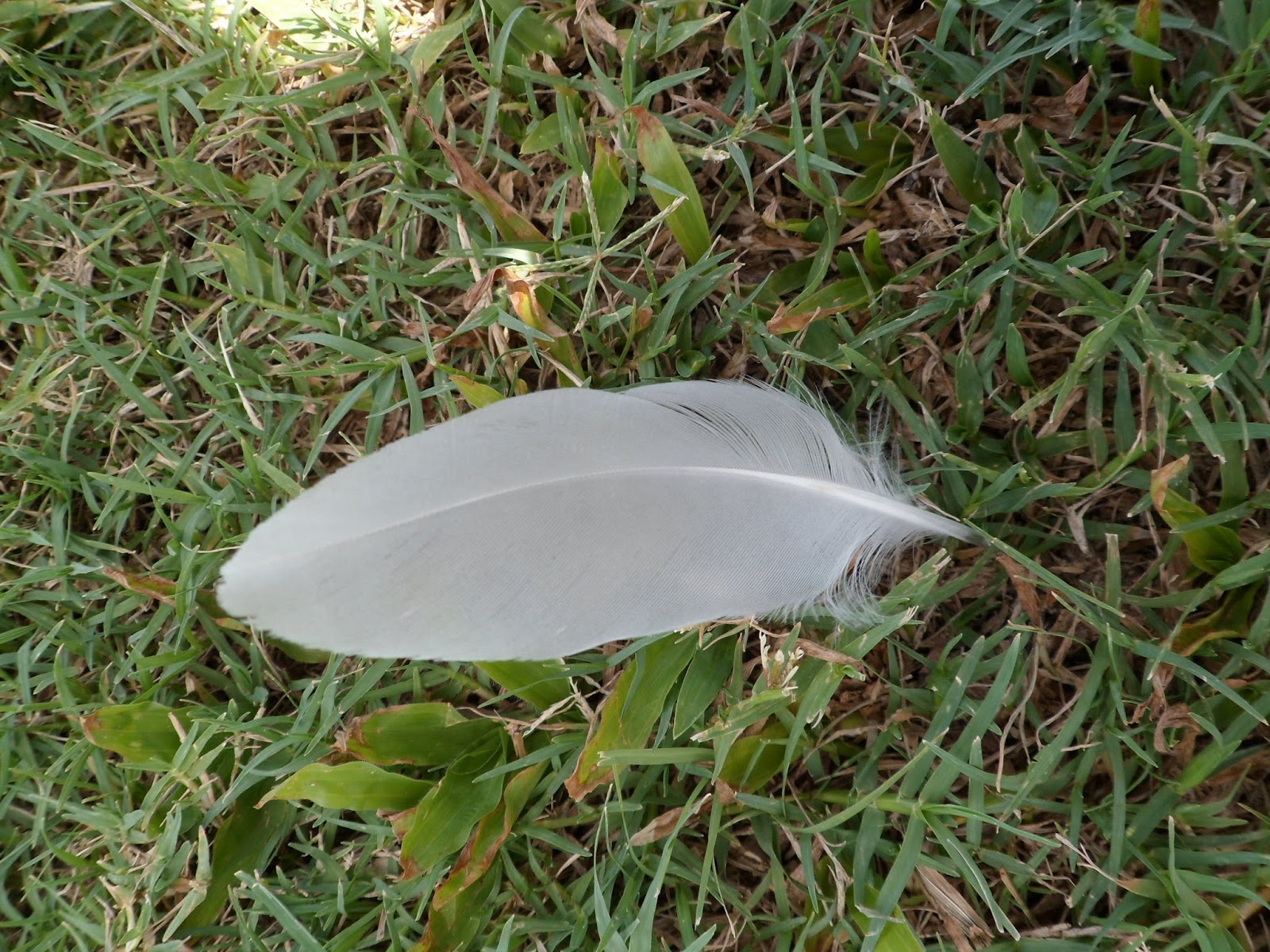
The ancient feathers look at lot like this one.


Joel Kontinen

The little feathers trapped in amber are assumed to be almost 100 years old. Whereas New Scientist reports that they belonged to tiny flying dinosaurs, National Geographic is more forthright and acknowledges that what was found was dinosaur-era bird wings:

Rare Dinosaur-Era Bird Wings Found Trapped in Amber. Bone, tissue, and feathers show the almost 100-million-year-old wings are remarkably similar to those on modern birds.”

They sure look like bird wings with modern-looking feathers.

The NG article states:

Two tiny wings entombed in amber reveal that plumage (the layering, patterning, coloring, and arrangement of feathers) seen in birds today already existed in at least some of their predecessors nearly a hundred million years ago.”

But then NG couldn’t resist interpreting the finds from a philosophical perspective:

A study of the mummified wings, published in the June 28 issue of Nature Communications and funded in part by the National Geographic Society's Expeditions Council, indicated they most likely belonged to enantiornithes, a group of avian dinosaurs that became extinct at the end of the Cretaceous period.

Here’s the gist of the science part. It certainly does not suggest that the feathers came from dinosaurs:

The two new samples, weighing in at only 0.06 and 0.3 ounces (1.6 and 8.51 grams), contain bone structure, tracts of feathers, and soft tissue. They are the first Cretaceous plumage samples to be studied that are not simply isolated feathers, according to study co-author Lida Xing of the China University of Geosciences.

Soft tissue has also been found in Archaeopteryx feathers.

The very idea of soft tissue lasting “150 million years” or even “100 million years” is anything but credible.

But NG goes on to say:

Skin, muscle, claws, and feather shafts are visible in both samples, along with the remains of rows of primary asymmetrical flight feathers, secondary feathers, and covert feathers. All are similar in arrangement and microstructure to modern birds.”

Is there anything in the feathers that would suggest a dinosaur connection?

No. All the details point to a bird as the owner of these exquisite body parts. Darwinian evolution assumes that dinosaurs turned into birds, but given the enormous number of changes that would be needed in such a transformation, this scenario belongs to the realm of science fiction.

Source:

Romey, Kristin. 2016. Rare Dinosaur-Era Bird Wings Found Trapped in Amber. National Geographic (28 June).


Saturday, 9 April 2016

Thank Evolution for Our Finely Tuned Internal Clock?

Does evolution make us – and dogs – drowsy in the early afternoon?


Joel Kontinen

In a report on the pros and mostly cons of the Spanish siesta, the BBC invokes evolution as the ultimate explanation: “Millions of years of evolution have given our bodies a finely-tuned internal clock.”

This is not an isolated incident. Evolution is often used as an explanation for almost anything.

In Darwinian thinking, natural selection is almost a miracle worker. The facts speak an entirely different language, however.

The late Philip S. Skell, a member of the US National Academy of Sciences (NAS) and Emeritus Evan Pugh Professor at Pennsylvania State University, was sceptical of Darwinian explanations. Writing in The Scientist, he lamented how natural selection was used to explain practically anything:

Natural selection makes humans self-centered and aggressive – except when it makes them altruistic and peaceable. Or natural selection produces virile men who eagerly spread their seed – except when it prefers men who are faithful protectors and providers. When an explanation is so supple that it can explain any behavior, it is difficult to test it experimentally, much less use it as a catalyst for scientific discovery.”

Mutations have not fared any better. They mostly destroy and eliminate.

In 2013, the journal Experimental Physiology published a paper by Dennis Noble, a Professor Emeritus of Oxford University, entitled Rocking the Foundations of Evolutionary Biology. He basically said that Neo-Darwinism was wrong: “All the central assumptions of the Modern Synthesis (often also called Neo-Darwinism) have been disproved.”

There’s more. Epigenetics is a big challenge for Darwinian orthodoxy.

And soft tissue in dinosaurs and marine reptiles as well as radiocarbon in dinosaur bone challenge the millions-of-years mantra.

When it comes to our internal clock, the Darwinian dimension seems to be totally superfluous – it’s merely another just so story that has nothing to do with true science.

Source:

BBC Magazine. 2016. The end of the Spanish siesta? (9 April).


S