Showing posts with label radiocarbon. Show all posts

Wednesday, 26 August 2020

Earliest Human Bedding Found In South Africa


Image courtesy of Bob Rayner CC BY 2.0.


Joel Kontinen

Evolutionists see the Border Cave in the Lebombo Mountains of South Africa as the earliest bedding made by humans, some 200,000 years ago.

They see that “the ancient humans used ash and plant material to repel insects while they slept. “

“Lyn Wadley, an archaeologist at the University of the Witwatersrand, made the discovery when excavating Border Cave with her team.”

Researchers aren’t sure about the dates. They could be off by thousands of years

Source. 

O’Grady Cathleen. 2020. World’s oldest camp bedding found in South Africa  Science August 13.


Thursday, 31 May 2018

Radiocarbon Dating Might Give Too Old Dates, at Least in the Levant

Image: Julius Schnorr von Carolsfeld (1794-1872), The Battle of Jericho, Public Domain.


Joel Kontinen

Radiocarbon dating is thought to be a highly reliable dating method, but a new paper published in the journal PNAS suggests that carbon dates may be off by several decades and, in some cases, a hundred years or so.

Other dating methods are even less reliable.

Manning et al. state:

“We observe a substantive and fluctuating offset in measured radiocarbon ages between plant material growing in the southern Levant versus the standard Northern Hemisphere radiocarbon calibration dataset derived from trees growing in central and northern Europe and North America. This likely relates to differences in growing seasons with a climate imprint.”

They go on to say:

“This finding is significant for, and affects, any radiocarbon application in the southern Levant region and especially for high-resolution archaeological dating—the focus of much recent work and scholarly debate, especially surrounding the timeframe of the earlier Iron Age (earlier Biblical period). Our findings change the basis of this debate; our data point to lower (more recent) ages by variously a few years to several decades.”

The half-life of Carbon-14 is 5,730 years, so the study does not affect really old dates.

Evolutionists will not carbon date dinosaur bone, though they certainly should do so, as they’re known to contain C-14, thus falsifying the dogma of millions of years.

And they should date coal and diamonds as well.

Source:

Manning, Sturt W et al. 2018. Fluctuating radiocarbon offsets observed in the southern Levant and implications for archaeological chronology debates. PNAS (29 May).

Thursday, 30 November 2017

Lightning Can Produce Atmospheric Radiocarbon (C-14)

More radiocarbon forming? Image courtesy of Simon Q, CC BY 2.0.


Joel Kontinen

In February a thunderstorm in Japan had unexpected consequences. Teruari Enoto, an astrophysicist at Kyoto University, and his colleagues discovered that lightning produced more atmospheric radiocarbon.

A news article in Nature states:

“The main source of the carbon-14 in the atmosphere has generally been considered to be cosmic rays. In principle, lightning could also contribute to the supply. But it is not clear yet how much of the isotope is produced in this way, says Enoto, in part because it’s possible that not all bolts initiate photonuclear reactions.”

Many evolutionists used to think that radiometric dating methods were reliable, but a number of studies have shown that they were wrong.

This applies to several dating methods and their basic assumptions.

Geologists will now admit that zircon crystals, ultrasonic cavitation and even solar flares can skew dates.

In addition, science publications have suggested that the uranium-lead method and some other methods tend to give too old dates.

Radiocarbon dating is a special case, as it does not give dates in the millions of years due to its relative short half-life of approximately 5,730 years.

Nonetheless, the Japanese study suggests we should be a bit more critical of radiocarbon dates as well.

Source:

Castelvecchi, Davide. 2017. Lightning makes new isotope. Nature News (22 November).


Saturday, 9 April 2016

Thank Evolution for Our Finely Tuned Internal Clock?

Does evolution make us – and dogs – drowsy in the early afternoon?


Joel Kontinen

In a report on the pros and mostly cons of the Spanish siesta, the BBC invokes evolution as the ultimate explanation: “Millions of years of evolution have given our bodies a finely-tuned internal clock.”

This is not an isolated incident. Evolution is often used as an explanation for almost anything.

In Darwinian thinking, natural selection is almost a miracle worker. The facts speak an entirely different language, however.

The late Philip S. Skell, a member of the US National Academy of Sciences (NAS) and Emeritus Evan Pugh Professor at Pennsylvania State University, was sceptical of Darwinian explanations. Writing in The Scientist, he lamented how natural selection was used to explain practically anything:

”Natural selection makes humans self-centered and aggressive – except when it makes them altruistic and peaceable. Or natural selection produces virile men who eagerly spread their seed – except when it prefers men who are faithful protectors and providers. When an explanation is so supple that it can explain any behavior, it is difficult to test it experimentally, much less use it as a catalyst for scientific discovery.”

Mutations have not fared any better. They mostly destroy and eliminate.

In 2013, the journal Experimental Physiology published a paper by Dennis Noble, a Professor Emeritus of Oxford University, entitled Rocking the Foundations of Evolutionary Biology. He basically said that Neo-Darwinism was wrong: “All the central assumptions of the Modern Synthesis (often also called Neo-Darwinism) have been disproved.”

There’s more. Epigenetics is a big challenge for Darwinian orthodoxy.

And soft tissue in dinosaurs and marine reptiles as well as radiocarbon in dinosaur bone challenge the millions-of-years mantra.

When it comes to our internal clock, the Darwinian dimension seems to be totally superfluous – it’s merely another just so story that has nothing to do with true science.

Source:

BBC Magazine. 2016. The end of the Spanish siesta? (9 April).


S

Monday, 22 June 2015

Study Shows Dinosaur Bone Contains Radiocarbon (C-14)


New research suggests that dinosaurs are much younger than previously assumed.


Joel Kontinen

Scientists believing in deep time (i.e. millions of years) would not expect to find radiocarbon (C-14) in dinosaur bone. After all, they assume that the “terrible lizards” died out some 65 million years ago.

With a half-life of 5,730 years, all C-14 should have gone in 100,000 years.

But what happens if researchers actually test whether dinosaur fossils contain C-14?

They will find it. The latest issue of the peer reviewed journal Creation Research Society Quarterly examines dinosaurs and soft tissue and reports on a study on radiocarbon in dino bone:

“Measurable amounts of radiocarbon have been consistently detected within carbonaceous materials across Phanerozoic strata. Under uniformitarian assumptions, these should no longer contain measurable amounts of radiocarbon. Secularists have asserted that these challenging finds originate from systematic contamination, but the hypothesis of endogenous radiocarbon should be considered. Assuming these strata were largely deposited by the Noahic Flood occurring within the time range of radiocarbon’s detectability with modern equipment under uniformitarian assumptions, we hypothesized that fossils from all three erathems, including dinosaur fossils, should also contain measurable amounts of radiocarbon. Consistent with this hypothesis, we report detectable amounts of radiocarbon in all 16 of our samples."

‘Carbonaceous materials’ probably refer to coal and diamonds that are known to contain radiocarbon.

Soft tissue has been found in many kinds of animals assumed to be millions of years old.

Brian Thomas and Vance Nelson went on to say:

“Unexpectedly, all 16 samples submitted for measurement contained C-14. We found measurable amounts of 14C in all 14 of our dinosaur and other fossils. Moreover, we found surprising consistency in these data, which range from approximately 17,850 to 49,470 radiocarbon years as indicated in Figure 1.”

This was not the first time radiocarbon was found in dinosaur bone but it was the most comprehensive study so far. (Read about past research here and here.) The measurements were made in laboratories that had no axe to grind, and the researchers ruled out contamination.

Thus, dinosaurs could not have lived millions of years ago. The pre-flood world was probably very different from ours, so the radiocarbon dates in the tens of thousands of years do not correspond to the actual time the dinosaurs died, but they are nevertheless much nearer to biblical dates than to secular ones based on uniformitariarism.

This research suggests that the model based on Genesis corresponds to scientific evidence while the one based on evolution does not.


Source:

Thomas, Brian and Vance Nelson. 2015. Radiocarbon in Dinosaur and Other Fossils. Creation Research Quarterly 51:4, 299–311.


Saturday, 6 April 2013

Discovery of Radiocarbon in Dinosaur Bones Prompts Censorship


Researchers announced the discovery of C-14 in dinosaur bone.


Joel Kontinen


Researchers have found radiocarbon (C-14) in dinosaur bone. For those who accept the conventional dates in the tens of millions of years, this might seem very disturbing. After all, C-14 has a half-life of 5, 730 years. Thus, after roughly 100, 000 years there should be no C-14 left.

The discovery of soft tissue and collagen in dinosaur bones has prompted some researchers to question the conventional textbook dates. Furthermore, an international geophysics conference held in Singapore in August 2012 announced the discovery of C-14 in dinosaur bone.

Dr. Thomas Seiler, a German physicist, and other researchers presented their findings at the 2012 Western Pacific Geophysics Meeting in Singapore (August 13-17), arranged jointly by the American Geophysical Union (AGU) and the Asia Oceania Geosciences Society (AOGS). Their research was based on their “dating of multiple samples of bone from 8 dinosaurs from Texas, Alaska, Colorado, and Montana.”

The researchers took every precaution to rule out contamination and came to the conclusion that the dinosaurs could not have been older than 22,000 to 39,000 years, based on the current C-14/C-12 ratio, which ignores the impact of Noah’s Flood. The Flood buried enormous amounts of carbon, thus resulting in an entirely different C-14/C-12 ratio.

The arrangers of the AOGS-AGU conference were not pleased with the results. They deleted the abstract Dr. Seiler and colleagues had produced. Science is not supposed to work like this, but many are reluctant to challenge the prevailing paradigm of millions of years.

Their solution is the censorship of disturbing data.

This was not the first time radiocarbon was discovered in dinosaur bone.

Source:

Dinosaur bones Carbon-14 dated to less than 40,000 years. New Geology.us


Sunday, 8 March 2009

Two Evolution Forums, Two Diametrically Opposed Conclusions


How old are we? New astonishing radiocarbon dates for dinosaur bones


Joel Kontinen

According to a common myth, Roman Catholics have no problem with believing in the Bible and believing in evolution. This might be the position taken by the evolution conference held at the Gregorian University in Rome. Sponsored by the Templeton Foundation, it excluded all scientists who are critical of Darwinian evolution.

However, earlier in February, another Catholic symposium on evolution was also held in Rome. The participants of the international symposium entitled “The Theory of Evolution: A Critical Analysis” (“La Teoria dell’ Evoluzione: Un Bilancio Critico”), were Catholic scientists, philosophers and historians. Many of them had earned doctorates.

Writing for the newsletter of the Kolbe Center for the Study of Creation, a U.S. Catholic organisation that is critical of Darwinian evolution, Hugh Owen summarised some of the papers presented.

Guy Berthault, a sedimentologist, demonstrated that massive sedimentary formations could be formed “in a fraction of the time allocated to them by the conventional time scale.”

Dr. Jean de Pontcharra, who is a nuclear physicist, pointed out that radiometric dates for long ages were unreliable. He showed that the validity of the basic assumptions behind the methods was suspect.

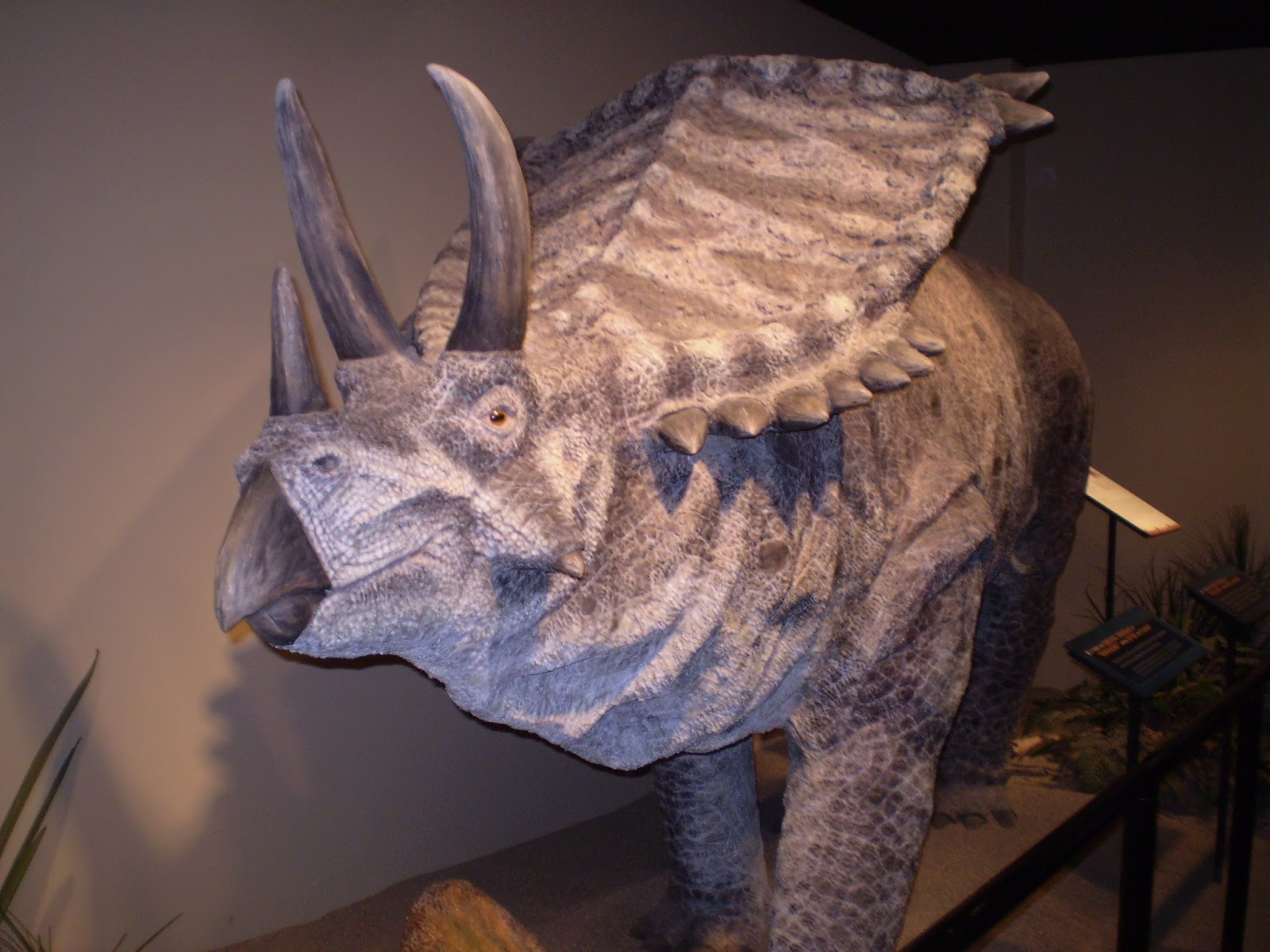
Hugh Miller, a research chemist, disclosed interesting rabiocarbon dates for dinosaur collagen he and his co-authors, doctors Josef Holzschuh and Jean de Pontcharra, had obtained by using the accelerated mass spectrometer (AMS) method. They extracted collagen from dinosaur bones at the Glendive (MT) Dinosaur & Fossil Museum. The femur bones of both a Triceratops and a Hadrosaur contained collagen. The Triceratops was dated at 30,890 ± 380 radiocarbon years and the Hadrosaur at 23,170 ±170 years.

Interestingly, the remains of some animals such as mastodons that are known to have co-existed with modern man have yielded roughly similar dates.

The global flood in Noah’s day is the most likely cause of the dates not being even lower.

While carbon dates are not absolute, no dinosaur bone should in the evolution paradigm contain any radiocarbon. C-14 or radiocarbon is carbon’s unstable isotope that has a half life of 5 700 years so finding any radiocarbon in a 65 million year old dinosaur should in effect falsify the dogma of millions of years.

And that would mean saying goodbye to Darwinian evolution.

The proceedings of the symposium will later be published in both English and Italian.

Source:

Owen, Hugh. 2009. Traditional Catholic Forum. Newsletter of the Kolbe Center for the Study of Creation. http://www.websitetoolbox.com/tool/post/apologia/vpost?id=3347253&trail=14#4