Showing posts with label morals. Show all posts

Thursday, 15 October 2020

Are We Living In A Simulation?


Image courtesy of agsandrew, Shutterstock.com.

Joel Kontinen

Are we living in a simulation? an argument in Scientific American and then posted in Life Science, say that the probability is 50–50.

The article goes back to the years 2003, when “Nick Bostrom of the University of Oxford wrote a seminal paper about the simulation argument, philosophers, physicists, technologists and, yes, comedians have been grappling with the idea of our reality being a simulacrum.”

if we are simulated beings, then we lose our Genesis-given rights to be individuals, who are responsible for their task and duties. That is, we cease being humans with moral skills.

Then comes astronomer David Kipping, of Columbia University who ”began by turning the trilemma into a dilemma. He collapsed propositions one and two into a single statement, because in both cases, the final outcome is that there are no simulations. Thus, the dilemma pits a physical hypothesis (there are no simulations) against the simulation hypothesis (there is a base reality—and there are simulations, too). “You just assign a prior probability to each of these models,” Kipping says. “We just assume the principle of indifference, which is the default assumption when you don’t have any data or leanings either way.”

But the argument has a fair amount of those who say it’s not possible. so maybe, we’ll still living in an un-simulated world,

Source:

Ananthaswamy, Anil. 2020.  Do we live in a simulation? Chances are about 50–50. Live Science  14 October.


Monday, 18 July 2016

Thank Evolution for Bad Science

Is Charles Darwin culpable for bad science?


Joel Kontinen

The scientific community is facing a huge crisis.

Increasingly, researchers are publishing results that others can’t replicate. Scientific misconduct is on the rise. Many papers have been retracted, as scientists were less than rigorous in their research.

Unfortunately, at least one good paper was also retracted for no other reason than its use of two non-Darwinian keywords.

Now two scientists are proposing an interesting reason for increasing scientific misconduct: evolutionary forces.

Writing in New Scientist, Simon Oxenham says:

Paul Smaldino and Richard McElreath at the University of California Davis used an evolutionary theory-based computational model to analyse the problem of bad science. They found that ‘the most powerful incentives in contemporary science actively encourage, reward and propagate poor research methods and abuse of statistical procedures’. In short, it’s natural selection for shoddy science.”

Well, if that is what evolution-believing researchers think, how can we trust anything they say?

While scientists are fond of using words like ‘innovative’, ‘groundbreaking’ and ‘novel’ in the abstracts of their papers, they tend to exaggerate the importance of their findings:

Smaldino and McElreath found that their model pushed researchers to do less rigorous science, and publish more false positives. They suggest that their model shows that bad science can be explained as a result of the evolutionary selective pressures that are acting on scientists.

Putting it in slightly different words, it seems that scientific misconduct thrives in the Darwinian community.

For instance, evolutionary psychologist Marc Hauser, a champion of Darwinian morality, was accused of scientific misconduct.

So perhaps we should thank evolution for bad science.

Source:

Oxenham, Simon. 2016. Evolutionary forces are causing a boom in bad science. New Scientist (8 July).


Tuesday, 22 March 2016

Religion Is Good for Us, It Helps Us to Co-operate, Research Suggests


The old rugged cross could help us to be better individuals.


Joel Kontinen

Even though PloS ONE recently deemed that one should not use the word Creator in a science paper, journals cannot escape the concept of a supernatural being.

While some atheists used to claim that religion was bad for us, it seems that those days are past and gone, as several studies have pointed out the very opposite.

A paper published in the journal Nature looked at how beliefs affected behaviour suggested that religion helps us to co-operate.

Science Daily summarises the findings:

Beliefs about all-knowing, punishing gods -- a defining feature of religions ranging from Christianity to Hinduism -- may have played a key role in expanding co-operation among far-flung peoples and led to the development of modern-day states.

Researchers looked at how religion affects humans' willingness to co-operate with those outside their social circle. They found that beliefs about all-knowing gods fosters co-operation
.”

It was a fairly comprehensive study, involving “interviews and behavioural experiments with nearly 600 people from communities in Vanuatu, Fiji, Brazil, Mauritius, Siberia and Tanzania whose religious beliefs included Buddhism, Christianity, Hinduism, animism and ancestor worship.”

The study suggested that religion is good for us. It helps us to co-operate. Knowing that we are accountable for our deeds will keep us from being nasty, even towards strangers.

The take away message of this paper is that if we believe in a Deity that sees what we are doing and that He will punish us if do bad deeds, we will be morally better individuals.

Religion has not been absent from science publications lately. They have speculated on the assumed evolution of religion and the significance of God and religion.

It is indeed difficult to escape God. I wonder what God thinks of us, as we don’t believe in him?,” a young atheist kid once asked.

Source:

University of British Columbia. 2016. Beliefs about all-knowing gods fosters co-operation. Science Daily (10 February).


Monday, 8 June 2015

FIFA Bribery Scandal: ” If You're Pious, Open a Church,” Ex-FIFA Chief Jack Warner Says


An open-air church: The cross speaks of Christ’s victory over sin and death.


Joel Kontinen


Reporting on the recent FIFA corruption scandal that has made headlines in most countries where soccer is played (and that means everywhere), the BBC says of former FIFA chief Jack Warner:

Mr Warner, who had withdrawn support from Mr Blatter, allegedly gave delegates from different countries a total of $600,000 in bribes – in the form of envelopes stuffed with $40,000 in cash. The US indictment says that when one of his colleagues expressed concern, Mr Warner said: ‘There are some people here who think they are more pious than thou. If you're pious, open a church, friends. Our business is our business.’

While many top footballers such as Miroslav Klose are professing Christians who would definitely not approve of the fouls committed by the FIFA bosses, Mr. Warner does have a point. Although we might not have taken bribes, the Bible clearly states that all people – even the pious – are sinners in need of salvation unless they have met the risen Christ and yielded to Him.

This sad state of affairs began in the Garden of Eden, when Adam and Eve, the first human beings, decided to turn their backs on God who had created them in His image.

But God did not forget mankind. He stepped into history as a human being and suffered the ultimate penalty for sin – death.

Then on the third day, Jesus rose from the dead. 50 days after that, on the day of Pentecost, the Christian church was born.

Source:

Jack Warner: Ex-Fifa chief at centre of storm. BBC news 4 June 2015.


Wednesday, 27 May 2015

Scientific Misconduct Thrives in the Darwinian Community


Scientific misconduct thrives in an atmosphere impregnated by the ideology that this Victorian gentleman wrote about.


Joel Kontinen

As far as we can tell, very few of those carrying out the horrors of the twentieth century worried overmuch that God was watching what they were doing,” David Berlinski writes in his book The Devil’s Delusion: Atheism and its Scientific Pretensions.

He was referring to some of the most infamous leaders of all time – who managed to kill millions of people. Most of them were atheists and they drew inspiration from Darwinian evolution.

While ISIS is certainly brutal, the atrocities committed by some evolution-believing leaders were by far much deadlier.

One might perhaps see a parallel between what happened then and what is happening now in the world of science. If researchers believe that there is no ultimate lawgiver, they might bend the rules, if they think they can get away with it.

Scientific misconduct seems to thrive in a community that embraces Darwinism.

Misconduct in science seems to be a global phenomenon. Now and then, science publications report on researchers who have distorted data or perhaps tried to make their research conclude something it doesn’t.

Recently, the journal Nature reported on misconduct in UK universities:

Just a fraction of universities in the United Kingdom have made public the extent of their investigations into research misconduct, a survey has found — even though all have been told that they should do so.”

The survey disclosed that of the 44 universities the survey contacted, only 27 responded. Of these “only one-third had published summaries of their investigations into research misconduct for 2013–14.”

Twelve reports were published. They discussed 21 cases of alleged misconduct, including plagiarism, falsification, questions over authorship, fabrication and breach of confidentiality.

Darwinism might not be a good idea for science.


Sources:

Berlinski, David. 2008. The Devil’s Delusion: Atheism and its Scientific Pretensions. New York: Crown Forum. The above quote is from pp. 26–27.

Gibney, Elizabeth. 2015. UK universities slow to publish reports of misconduct investigations. Nature 521 (7552), 271. Nature (21 May 2015).


Thursday, 29 May 2014

Scientific Sins and Other Darwinian Fables

Chimp-based Darwinian morality led to extermination camps. Image courtesy of Dan Lietha, Answers in Genesis.


Joel Kontinen

What does the concept scientific sin bring to mind? Recently, New Scientist reviewed Mark Johnson’s book Morality for Humans: Ethical Understanding from the Perspective of Cognitive Science (University of Chicago Press, 2014). The title of the article – How moral fundamentalism becomes a scientific sin – suggests that this is not a discussion on the merits of traditional morality.

Kate Douglas summarises Johnson’s thesis as follows:

We are moral creatures because we need to be, in order to survive and flourish. Ethical reasoning is a form of problem-solving primarily concerned with situations where our values and interests conflict with those of others. Any social species encounters such situations, so morality is not uniquely human.”

Survival above all.

This is the old Darwinian explanation that has been repeated in popular science magazines time and again. Unfortunately for evolutionists, repetition does not make fiction into fact, regardless of how hard one tries this kind of alchemy.

The book's agenda becomes obvious: “Moral absolutism is immoral in that it shuts down precisely the kind of empirically informed ethical inquiry we most need for our lives."

The problem with this statement is that science is not supposed to know what is moral and what is not. In a naturalistic/ materialistic/ atheistic world, it ought to be neutral about such things. And scientific sin would be an oxymoron.

But neutrality tends to degenerate into something much worse. Just ask the holocaust survivors. The Nazis were able to kill six million Jews because they believed that no one was watching them.

In Nazi Germany, the Waffen-SS embraced a Darwinian view of ethics. As they did not believe in a Lawgiver to whom they would be accountable for their deeds, they killed millions of Jews, Gypsies and others that they thought were not as fit to live as the “Aryans”.

Keep pushing the moral boundaries because there are no absolutes,” Ms. Douglas concludes her review, claiming that morality “is not about Right or Good, simply about Better.”

Better for whom, one might ask. In a dog-eat-dog Darwinian world, all people will ultimately suffer. If we really want to make the world a better place, we should return to the morality that Jesus taught: “You shall love the LORD your God with all your heart, with all your soul, and with all your mind.’ This is the first and great commandment. And the second is like it: ‘You shall love your neighbor as yourself. “ (Matthew 22:37–39, NKJV).

Source:

Douglas, Kate. 2014. How moral fundamentalism becomes a scientific sin. New Scientist 2970 (26 May).


Tuesday, 16 April 2013

The Origin of Morality According to an Ape Researcher


Atheists would like to see the origin of morals in animals. Image courtesy of Wikipedia.


Joel Kontinen

The origin of morality is a hard nut to crack for Darwinists. Their evolution-based worldview has no shortage of insurmountable problems, such as the origin of life, the development of life and the origin of consciousness and language.

Frans de Waal, known for his research on chimpanzees and bonobos, discusses the origin of morality in his new book. He thinks that great apes have a rudimentary understanding of right and wrong, but he does not claim that they are moral beings.

As all readers of Mickey Mouse would remember, we tend to interpret the behaviour of animals from our human perspective. Attributing human traits to non-humans, a phenomenon known as anthropomorphism, can easily result in wrong interpretations. Thus, we might think that a dog (or a bonobo) feels shame, although there is an unbridgeable gap between humans and animals.

Only humans are morally accountable beings. In practice, this means that we should try to be accountable to our Creator instead of attempting to find excuses for not doing so, for instance by pretending that we are the results of blind Darwinian processes.


Source:

Dye, Lee. 2013. Do We Need God to be Moral? ABC News (7 April).


Sunday, 24 June 2012

Have We Evolved to Cheat?


If we believe that the chimpanzee is our cousin, we have no objective basis for being honest. Image courtesy of Wikipedia.


Joel Kontinen

Cheating is typical. In our experiments, we find that people can cheat a little and still feel good about themselves. That is a perfect example of irrationality,” says Dan Ariely, professor of psychology and behavioural economics at Duke University in Durham, North Carolina in New Scientist.

It is no secret that Darwinian evolution and irrationality are close relatives. An irrational worldview gives rise to irrational thinking and irrational deeds.

In a world where many people think that they have evolved from simpler beings in the space of hundreds of millions of years we would not be surprised that people do occasionally cheat. In the evolution model, there is no absolute standard of morality.

The history of Israel suggests that the problem of bad morality stems from a rejection of the laws that God has given us. The Book of Judges ends with a very sad story and a sad comment: “In those days Israel had no king; everyone did as they saw fit” (Judges 21:25, NIV).

Unfortunately, we are witnessing the very same story in our days.


Source:

Lawton, Graham. 2012. How much cheating is alright? New Scientist 2869:30-31.


Sunday, 13 November 2011

Evolutionist: “Corruption is Normal”


If people believe that they are descended from apes, they will not have an objective basis for morality – or that’s what they will assume.


Joel Kontinen

When looked at in evolutionary terms, clinging to the moral high ground could be seen as an irrational position,” Laura Spinney concludes in New Scientist magazine. Spinney examines the views some psychologists have of corruption and cheating.

New Scientist is right: If people believe that they are descended from apes, they will not have an objective basis for morality, or they will at least think so. They will feel that they are not accountable to any transcendent authority for their deeds. No wonder that corruption is rampant here and there.

Christianity offers an entirely different view of human accountability. We are ultimately accountable to God for our words and deeds. While we live in a world spoiled by the Fall, the gospel can change us so that we will resist our inclination to corruption and – as Jesus said in the Sermon on the Mount – live as salt and light in the world.

Source:

Spinney, Laura. 2011. The underhand ape: Why corruption is normal. New Scientist 2837: 42-45.

Sunday, 17 April 2011

No Place for God in the Humanist Bible


We won’t find atonement in this bible.


Joel Kontinen


A.C. Grayling, who is a leading atheist philosopher, has written The Good Book: A Humanist Bible (Walter Publishing 2011). Unlike all other Bibles, it lacks the spiritual dimension entirely. Grayling has divided his work into relatively short chapters like the real Bible and even drawn up his own version of the Ten Commandments.

Grayling, a professor at Birkbeck College, University of London, chose to quote the views of leading thinkers in his 600-page book. However, instead of apostles and prophets, he decided to use the ideas of secular philosophers and other thinkers.

Ancient thinkers often had wise ideas. Many philosophers and poets discussed fundamental questions.

When speaking with Greek philosophers at Athens, the apostle Paul for instance quoted two philosophers, Epimenides and Aratus. Both writers dealt with man’s relationship to God. Epimenides, (ca. 600 B.C.), a poet from Crete, said: “For in him [God] we live and move and have our being.” Aratus (ca. 315-240 B.C. ) from Cilicia wrote: ”We are his [God’s] offspring.”

Paul nonetheless understood that thinking about God was not enough. Man has to acknowledge that God is the Creator, Redeemer and Judge, who has left clear marks of his handwriting everywhere in nature.

Grayling arranged his work in roughly the same way as the Bible, to the extent that the name of the first chapter is Genesis. However, the chapter does not describe the early days of Adam and Eve, but a major scientific breakthrough featuring Sir Isaac Newton, who noticed that an apple falls downward from a tree.

Appealing to Newton in a humanistic work is somewhat ironic, since he believed sincerely that the Bible is a true account of mankind’s history and he also defended its credibility.

The fall of the apple is in any case Grayling’s version of the Fall of man. Humanists deny the sinfulness of man and believe that people are basically good.

If history teaches us anything, it teaches us that they have not learnt much from history.

Professor Grayling probably wants to show that even humanists are capable of living the good life, as long as they heed his ten commandments:

1 Love well.
2 Seek the good in all things.
3 Harm no others.
4 Think for yourself.
5 Take responsibility.
6 Respect nature.
7 Do your utmost.
8 Be informed.
9 Be kind.
10 Be courageous: at least, sincerely try.

The list of commandments suggests that Grayling owes most of his ideas to the real Bible, although in his world man and nature replace God. The work reflects man’s desire to be independent of his Creator, to the extent that he even denies His existence – for ideological reasons.

For Grayling, the crucified Christ is, to use the apostle Paul’s words, foolishness (1 Cor. 1:24). Paul pointed out that God’s wisdom is hidden from those who do not believe: “The person without the Spirit does not accept the things that come from the Spirit of God but considers them foolishness, and cannot understand them because they are discerned only through the Spirit.” (1 Cor. 2:14, NIV).

But to those whom God has called, both Jews and Greeks, Christ the power of God and the wisdom of God.”

By denying the revelation God has given, man robs himself of that what God has in store for him.

Source:

Ravitz, Jessica. 2011. Leading atheist publishes secular Bible.
CNN Belief blog
(11 April).

Sunday, 31 October 2010

Atheist claims religion cannot explain universal morality


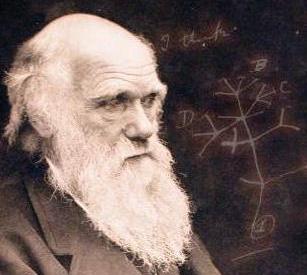
Sam Harris believes that Darwinian evolution can explain morality. The man looking behind the big beard is C. Darwin. Image courtesy of Wikipedia.


Joel Kontinen

Along with Richard Dawkins and Christopher Hitchens, Sam Harris is one of the most well-known militant atheists. Recently, Harris wrote an opinion piece in New Scientist in which he expressed his hope that the scientific study of morality would lead to sending religion to the scrap heap.

Harris’ view comes at an interesting time in the aftermath of the publicity surrounding Marc Hauser, the Harvard evolutionary psychologist who is the pioneer of evolution-based morality. Hauser is suspected of serious scientific misconduct. Yet, according to Hauser, ”the Darwinian pulpit” explains the universality of morality better than religion.

It did not prevent Hauser from producing questionable research results that his fellow-Darwinists strongly disapprove of, however.

Harris believes in the same source of morality as Hauser. He thinks that ”science”, by which he probably means an evolution-based worldview, can disclose why some things are acceptable and some other things are not.

Harris’ view is fraught with problems as Hauser’s evolution-based model has not worked very well in practice.

Logic would thus have us search for the origin of morality somewhere else. The Apostle Paul wrote in Romans that all people, including non-Jews, know the moral law:

The requirements of the law are written on their hearts, their consciences also bearing witness.” (Rom. 2:15).

According to Paul, morality stems from creation. God has created us to be moral beings.

Sources:

Harris, Sam. 2010. Morality: 'We can send religion to the scrap heap' . New Scientist 2782 (20 October).

Luskin, Casey. 2010. When Evolutionary Psychology Collides With Morality. Evolution News and Views (27 August).

Thursday, 9 September 2010

Marc Hauser and scientific misconduct: Is this an example of evolution-based morality?


Nature has covered Marc Hauser’s case in detail.


Joel Kontinen

Marc Hauser, an evolutionary psychologists at Harvard University, who has been under investigation for alleged scientific misconduct, has been found guilty.

A well-known scientist, Hauser's research has been published in prestigious journals such as Science and Proceedings of the Royal Society.

Hauser has researched primate cognition. Like other evolutionary psychologists, he has attempted to interpret human psychology on the basis of the psychology of our assumed animal ancestors.

Other researchers have been unable to verify the reliability of Hauser’s monkey experiments. The tests suggested that monkeys have cognitive skills that they apparently do not have.

Hauser’s case is somewhat ironic since he believes that moral conduct can be explained by evolution without appealing to religion. In his book Moral Minds: How Nature Designed Our Universal Sense of Right and Wrong (HarperCollins, 2006) Hauser says that ”the Darwinian pulpit” is a better explanation of morals than the church and religion. He thinks that morals based on religion are dangerous.

The Harvard inquiry found Hauser guilty of eight instances of scientific misconduct.

A tree is known by its fruit. Right now, the fruit of evolution do not appear to be very succulent.


Sources:

Ledford, Heidi. 2010. Harvard probe kept under wraps. Nature 466:7309, 908-909. (19 August).

Luskin, Casey. 2010. When Evolutionary Psychology Collides With Morality. Evolution News &Views (27 August).