Showing posts with label animal intelligence. Show all posts

Sunday, 5 May 2024

Orangutan is first non-human seen treating wounds with medicinal plant


Rakus the orangutan with an injury on his face, before he applied leaves to the wound

Armas

Joel Kontinen

Darwinist say that the orangutan is first non-human seen treating wounds with medicinal plant. That is not true, because some ants have also been treating their wounds with plants.

Well, this is what science says about orangutans at least one of them, they say that a male Sumatran orangutan (Pongo abelii) called Rakus, living in Gunung Leuser National Park in Indonesia has done that.

“There have been several previous reports of great apes attempting to self-medicate in other ways. Gorillas, chimpanzees and bonobos, for example, sometimes swallow whole leaves from Aspilia plants to get rid of intestinal parasites.”

This is a way that animals have used intelligent design to heal them.  

Source:

Chen Ly, 2024. Orangutan is first non-human seen treating wounds with medicinal plant | New Scientist 2 May


Monday, 25 March 2024

How do dogs understand words and what they mean?


Image courtesy of Gorodenkoff /, Shutterstock​. 

Joel Kontinen

When evolutionists think that great apes have the skill to understand words and their objects, science has a different story to tell.  

Now dogs can learn the names of objects. ”dogs seem to understand that words represent specific objects, recordings of their brain activity suggest.”

Dogss seem to understand that words represent specific objects, recordings of their brain activity suggest.

Marianna Boros at Eötvös Loránd University in Budapest, Hungary, and her colleagues tested 18 dogs from a wide range of breeds, including Border collies, toy poodles and Labrador retrievers.

Source:

James Woodford. 2024, Dogs really do understandthat words stand for objects, 22 March


Tuesday, 18 July 2023

Llamas solve problems faster after watching people do it


Image courtesy of Andrija12345678 CC BY-SA 4.0

Joel Kontinen

Llamas are better at performing tasks after watching a human or llama dol, 

This is called called social learning, It is common in primates and in certain birds but not in llamas,  

The researchers tried to get some 30 llamas and offered them food  as a reward,  They wee succesful in their task. 

source; 

Wetzel,  Corryn, 2023, Llamas solve problems faster after watching people do it. New Scientist 14 July


Monday, 10 July 2023

Crows know probability


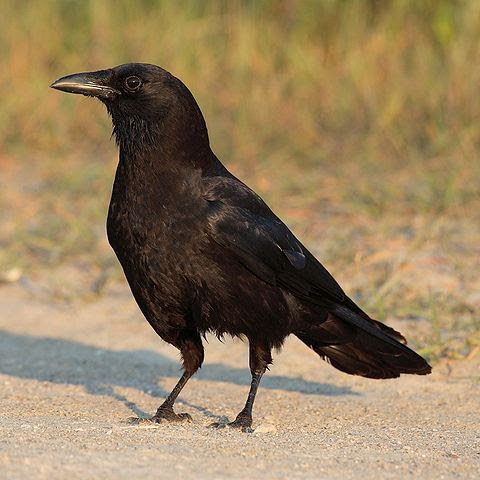
Image courtesy of American Crow - Singing Sands, Bruce Peninsula National Park, Ontario, Canada -- 2007 JuneCC BY-SA 3.0

Joel Kontinen

A new study has shown that Carrion crows understand probability, This was a surprise for evolution believing scientist who say that a bird brain is not an insult but they can found mathematicians called   statistical inference in them.

Melissa Johnston at the University of Tubingen in Germany and her team trained two carrion crows (Corvus corone) to peck at nine, different-coloured symbols to receive a reward: a small food pellet or worms .they found that the crows  understood probability, 

But it was God who gave crows such ´prowess 

Source:

Quaglia,  Sofia, 2023, Crows can understand probability like primates do. New Scientist 5 July, 

Saturday, 14 August 2021

Dolphins spotted trapping fish in mud rings in the Caribbean


Image courtesy of NASA. 
I
Joel Kontinen

Bottlenose dophins are clever hunters.Some evolutionist believe that they are alost human. 

A few work alongside human fishers, coaxing fish ashore. Others use shells to catch their food. In the Florida Keys, some use “mud rings” – and now the behaviour has been documented in the Caribbean too.

The mud ring hunting strategy is a case of blindsiding prey. A “ring maker” dolphin circles near the ocean floor and traps fish behind a ring of mud as others lie in wait with mouths open, and lunge to catch any fish attempting to escape the mud by jumping out of the water.

This is an instance of intelligent design  that a few animals show

Source:

 Kentish,  Alison. 2021.  Dolphins spotted trapping fish in mud rings in the Caribbean New Scientist 6 August.  


Monday, 8 March 2021

Cuttlefish show self-control


Image courtesy of Shutterstock. 

Joel Kontinen

The cuttlefish (Sepia officinalis) is a cunning creature, it uses a clever strategy to evade sharks. it can also count

Some other animals also know maths. Ants and Asian elephants can solve rudimentary problems that require counting.

What is interesting is that at least one plant, the Venus flytrap, also knows how to count.

For Darwinists, animal intelligence is an enormous dilemma, and plant intelligence even more so.

But in a created world we would expect animals and plants to show evidence of intelligence..

A recent research also points out that the cuttlefish passed the marshmallow test that displays if an animal could delay gratification.

Source: 

 Saplakoglu, Yasemin. 2021. Cuttlefish show self-control, pass 'marshmallow test' Live Science 4 March. 


Monday, 9 March 2020

The parrots that understand probabilities

A kea,image courtesy of Markus Koljonen, CC-BY-SA-2.5.


Joel Kontinen

According to evolution, chimps should be next to humans as learners. However, a new video shows that The New Zealand kea can outperform monkeys in several intelligence tests

A group of kea, a type of parrot from New Zealand, have been surprising scientists with their smart predictions. Researchers set them a series of intelligence tests based around probabilities and social cues. They found that kea can perform better than chimps .


The parrots that understand probabilities Nature video.

Friday, 26 October 2018

Biomimicry: Mantis Schrimps Punch with The Force of a Bullet


Image courtesy of Silke Baron, CC BY 2.0.


Joel Kontinen

Intelligent design in nature is so evident that it is becoming increasingly difficult to deny it. In recent years, researchers have copied many amazing designs they have seen in the animal kingdom.

A case for intelligent design is the mantis shrimp, that has many users.

The mantis shrimp smashes its victims’ shells with the force of a .22 caliber bullet. “But that’s not because it has particularly powerful muscles – instead of big biceps, it has arms that are naturally spring-loaded, allowing it to swing its fistlike clubs to speeds up to 23 metres per second.”

“The key part of a mantis shrimp’s punch is a saddle-shaped structure on the arm just above the shrimp’s club. This shape works a bit like a bow and arrow, says Ali Miserez at Nanyang Technological University in Singapore: the muscles pull on the saddle to bend it like an archer’s bow, and when it is released that energy transfers into the club.”

The shrimp’s saddle holds all that energy without snapping. They found that it works because of a two-layer structure. The top layer is made of a ceramic material similar to bone, and the bottom is made of mostly plastic-like biopolymers.

When the saddle is bent, the top layer gets compressed and the bottom layer is stretched. The ceramic can hold a lot of energy when it is compressed, but is brittle when bent and stretched. The biopolymers are stronger and stretchier, so they hold the whole thing together
.”

This isn’t something that Darwin’s blind watchmaker, natural selection, works, in that the shrimp’s punch may be useful in microrobots.

Biomimicry is a science that bring out that what God has designed. And what he did, He did very well.

Source:

Crane, Leah. 2018. Mantis shrimps punch with the force of a bullet – and now we know how. New Scientist (18 October).

Monday, 19 February 2018

Clever Ants Ward Off Diseases by Using Antibiotics

The thief ant (Solenopsis molesta) is surprisingly clever. Image courtesy of AntWeb.org. ,CC BY-SA 3.0.


Joel Kontinen

Ants have made headlines in the past few days.

First, research showed that they treat injured comrades.

Then a paper published in the journal Royal Society Open Science suggested that 60 per cent of ant species examined by researchers at the North Carolina State University used antibiotics to ward off infections.

Researchers already knew that some species of ants produced antimicrobials or “chemical compounds that kill pathogens,” but the results were a big surprise:

“The most potent antimicrobial was produced by one of the smallest ants in the study — Solenopsis molesta, also known as the thief ant — which also lives in some of the smallest colonies,” Live Science reports.

This sounds a lot like intelligent design.

Ants defy Darwinian expectations by harvesting seeds, creating elaborate farming systems, mastering basic mathematics, as well as by building impromptu bridges and living rafts.

Moreover, ants are living fossils that haven’t changed in aeons.


Source:

Weisberger, Mindy. 2018. Ant Species Stay Healthy with Self-Made Antibiotics. Live Science (13 February).

Thursday, 15 February 2018

Ants Treat Injured Comrades, Defying Darwinian Expectations

Image courtesy of Dawidi, CC BY-SA 3.0.B.


Joel Kontinen


We would not expect animals to care for their wounded comrades in a Darwinian world, but in a created world it is no big deal, as God has given animals the intelligence they need for coping in a post-Fall environment.

A new paper published in the journal Proceedings of the Royal Society B features African Matabele ants (Megaponera analis) that are known for waging wars against other ant colonies. Now, researchers found that they care for the injured, carry them home and even clean their wounds, perhaps with an antibiotic substance to “fend off infections,” as an article in The Guardian puts it.

Ants defy Darwinian expectations by harvesting seeds, creating elaborate farming systems, mastering basic mathematics, building impromptu bridges and living rafts.

Ants are living fossils that haven’t changed in aeons.

Source:

Sample, Ian. 2018. ‘Paramedic ants' observed treating injured comrades. The Guardian (14 February).

Wednesday, 20 December 2017

Bumblebees “Solve the Travelling Salesman Problem on the Fly”

Bumblebees are amazingly smart. Image courtesy of Bernie Kohl, public domain.


Joel Kontinen

Bumblebees are amazingly smart: they can detect weak electric fields with their mechanosensory hairs.

Recent research disclosed another amazing skill they have: “a grasp of maths that enables them to crack the classic travelling salesman problem as they forage for pollen and nectar.”

New Scientist describes this problem as follows: “Given a list of cities and the distances between each pair of cities, what is the shortest possible route that visits each city and returns to the origin city?”

It seems that bumblebees with their tiny brains are at least equal to, if not better than, the best human computer programmes that attempt to tackle this problem.

If this sounds a lot like intelligent design, the obvious reason is that it indeed is.

The animal kingdom abounds with designed features that challenge Darwinian evolution, for instance jellyfish navigation, the gliding skills of lemurs, gecko feet and the co-ordinated flight of tens of thousands of starlings.

Source:

New Scientist staff and Press Association. 2017. Bumblebees solve the travelling salesman problem on the fly. New Scientist (11 December).

Saturday, 1 July 2017

Cockatoo Makes Music With a Stick, Defying Darwinian Expectations

Image courtesy of Doug Janson, Creative Commons (CC BY-SA 3.0).


Joel Kontinen

Previous research has shown that cockatoos are better tool makers than chimps.

And there’s more. A recent paper on 18 palm cockatoos (Probosciger aterrimus) published in the journal Science Advances looks at the birds’ ability to make their own drumsticks and produce a rhythmic beat.

In contrast, chimps (that evolutionists hail as our cousins) can’t make music instruments.

Even crows beat chimps in intelligence and innovation, defying Darwinian expectations.

Source:

Wagner, Andrew. 2017. Watch this cockatoo make music with a stick. Science (28 June).

Tuesday, 17 January 2017

Clever Ant Farmers Harvest Seeds


Pogonomyrmex barbatus is a close relative of P. badius. Image courtesy of Steve Jurvetson, Creative Commons (CC BY 2.0).


Joel Kontinen

According to the Darwinian story, chimps and other big mammals should certainly be much smarter that tiny ants who have a minuscule brain.

However, ants seem to defy this dogma at almost every turn. Even evolutionists believe that they created an elaborate farming system some “25 million years” ago.

Ants are living fossils that haven’t changed in “100 million years".

Today’s ants seem to know basic mathematics, and are able to build impromptu bridges and living rafts, for instance.

New research discloses yet another surprise. As New Scientist puts it,

“Florida harvester ants, Pogonomyrmex badius, have developed a clever farming strategy to do so – they plant seeds, wait for them to germinate and then eat the soft spoils.

The article goes on to explain just how clever the ants are. While they cannot crack up the hard seeds, they have found a way to get at the nutritious food:

Germination … splits the tough husk, making the seed contents available as food for the ants. A single large seed may have nutritional value of 15 smaller seeds, so it makes sense to collect it and wait for it to crack open. Seeds from various species germinate at different times, which may give the ants a steady supply of their ‘crop’ ”.

The Bible describes ants as very industrious creatures and it definitely is true.

Source

Simičević, Vedrana. 2017. Harvester ants farm by planting seeds to eat once they germinate. New Scientist (13 January).

Sunday, 9 October 2016

Darwinian Theory of Mind: Making Apes Out of Humans – And Humans Out of Apes


I spy with my little eye something beginning with R. Image courtesy of Eleifert, Creative Commons (CC BY-SA 3.0).


Joel Kontinen

Evolutionists are averse to seeing humans as special. They want to see us as just another species of great ape, although the gap separating us and animals is so wide that no monkey can jump over it regardless of its attempts.

The latest Darwinian attempt is an experiment in which chimpanzees, bonobos and orangutans watch a video clip featuring a human being dressed as King Kong steals a rock from another human being and hides it in a box. Then King Kong drives the man away and puts the rock in another box. Then he changes his mind and takes the rock away.

The researchers used an infrared eye-tracker to see where the apes would look. Most of them fixed their eyes on the boxes and many looked at the one where the man assumed the rock was – although it wasn’t.

The Darwinian explanation for this is that apes have a theory of mind.

We could obviously do the experiment with dogs and get a similar result, as in many ways they are cleverer than chimps or other apes. But in the Darwinian world, dogs aren’t our close relatives, so such a result wouldn’t make headlines.

In a created world we would expect animals to be intelligent.

But we would not expect them to use language or worship their Maker or build theories, as they most probably are not capable of abstract thinking.

Only humans are created in the image of God and as such we are special:

What is man that you are mindful of him, and the son of man that you care for him? Yet you have made him a little lower than the heavenly beings and crowned him with glory and honor. You have given him dominion over the works of your hands; you have put all things under his feet.” (Psalm 8: 4–6, ESV).

Source:

Morell, Virginia. 2016. Humans aren’t the only great apes that can ‘read minds’ Science (6 October).


Thursday, 22 September 2016

Smart Ants Build Quick Impromptu Bridges


An ant bridge. Image courtesy of Geoff Gallice, Creative Commons (CC BY 2.0).


Joel Kontinen

Ants are ingenious creatures. While they have a miniature brain, they can do some basic arithmetic, and build living rafts and huge anthills.

Some of these structures are over 9 metres (30 feet) high. Taking their size into account, humans would have to erect buildings that are over 2 kilometres (1.25 miles) high to be able to compete with these clever builders.

Some ants have come up with an elaborate farming system. Evolutionists believe this happened some “25 million years” ago.

Recently, New Scientist (NS) described another amazing ability, viz. bridge building, that ants are good at:

“BARRO Colorado Island is tiny and sits in the middle of the Panama Canal. Here, below the forest dome, a diminutive predator scuttles over dead leaves and along narrow branches. Nearly blind, this Eciton army ant follows a trail of chemical signals laid down by her sisters. She pushes forward, relentlessly, in search of prey. Whatever she finds, she’ll bring back to the nest to share with her colony.

But then she stops. The ground has dropped away in front of her. There is no scent trail, just empty space. Other members of the colony that were following begin to climb over her. Now, instead of walking in a line, they grip hold of one another using hooks on their feet, adding body after body to build an impromptu bridge. More and more join in, until they traverse the gap. And there they remain until the entire foraging party, numbering hundreds, has crossed. Then, as suddenly as it came into being, the bridge disperses, and the ants continue on their way
.”

NS says that this is “an impressive feat of coordination.” Given their “very limited brainpower” and despite having no “overview of the situation” they manage to do the impossible.

This would be difficult if not impossible to explain by invoking Darwinian processes that tend to be more or less myopic.

But in a created world we would expect animals to be intelligent.


Source:

Hess, Peter. 2016. Get inside the collective mind of a genius superorganism. New Scientist (7 September).


Monday, 29 August 2016

Cuttlefish Can Count: Amazingly Intelligent Creatures Defy Darwinian Expectations

The common cuttlefish (Sepia officinalis). Image courtesy of Hans Hillewaert, Creative Commons (CC BY-SA 4.0).


Joel Kontinen

Cuttlefish are cunning creatures. They can stop breathing to evade predators, and they are the true champions of stealth technology, matching the shape and colours of their environment.

A recent paper published in the journal Proceedings of the Royal Society B suggests that cuttlefish know how to count – or at least they can distinguish which pile of shrimp is somewhat bigger than the other. They almost always tended to choose the one with more of their favourite meal.

They liked their food fresh. Given the choice between living and dead shrimp, they always chose the living one, preferring one living shrimp to two dead ones.

Some other animals also know maths. Ants and Asian elephants can solve rudimentary problems that require counting.

What is interesting is that at least one plant, the Venus flytrap, also knows how to count.

For Darwinists, animal intelligence is an enormous dilemma, and plant intelligence even more so.

But in a created world we would expect animals and plants to show evidence of intelligence.

Source:

Lawrence, Joanna. 2016. Cuttlefish Have Number Sense and Adaptability in Making Decisions. Natural Science News (25 August).


Tuesday, 14 June 2016

Bumblebees Are Amazingly Smart: They Detect Weak Electric Fields with Their Mechanosensory Hairs


Bumblebees are amazingly smart. Image courtesy of Bernie Kohl, public domain.


Joel Kontinen

Small creatures can be surprisingly intelligent. Ants seem to be able to count. Honeybees might build a mental map and their waggle dance is truly amazing.

Previous research has shown that bumblebees (Bombus terrestris) used a flower's electric field to find out whether other bumblebees had already been to the flower and whether it was worth going to.

A new paper published in PNAS looks at bumblebees’ ability to detect weak electric fields:

Bumblebees (Bombus terrestris) use information from surrounding electric fields to make foraging decisions. Electroreception in air, a nonconductive medium, is a recently discovered sensory capacity of insects, yet the sensory mechanisms remain elusive. Here, we investigate two putative electric field sensors: antennae and mechanosensory hairs.

What follows does not sound like it’s the work of the Blind Darwinian Watchmaker and reminds us that despite their name, bumblebees are anything but bumbling creatures:

Examining their mechanical and neural response, we show that electric fields cause deflections in both antennae and hairs. Hairs respond with a greater median velocity, displacement, and angular displacement than antennae. Extracellular recordings from the antennae do not show any electrophysiological correlates to these mechanical deflections. In contrast, hair deflections in response to an electric field elicited neural activity. Mechanical deflections of both hairs and antennae increase with the electric charge carried by the bumblebee. From this evidence, we conclude that sensory hairs are a site of electroreception in the bumblebee.

The animal kingdom abounds with designed features that challenge Darwinian evolution, for instance jellyfish navigation, the gliding skills of lemurs, gecko feet and the co-ordinated flight of tens of thousands of starlings.

Source:

Sutton, Gregory P. et al. 2016. Mechanosensory hairs in bumblebees (Bombus terrestris) detect weak electric fields. Proceedings of the National Academy of Sciences.

Sunday, 6 December 2015

Cuttlefish Uses Clever Strategy to Evade Sharks


A cuttlefish (Sepia officinalis). Image courtesy of Hans Hillewaert, Creative Commons (CC BY-SA 4.0).


Joel Kontinen

Cuttlefish stop breathing when a shark approaches them. This basically makes them invisible.

A paper published in the Proceedings of the Royal Society B shows that predators were very unlikely to detect cuttlefish that held their breath. An article in Science states:

When the frightened creatures froze in place and covered the cavity leading to the gills with their tentacles, the voltage in the water nearby dropped by about 80%.”

This made it very difficult for sharks to find them.

Animal intelligence should remind us that the One who made them was not a blind watchmaker but the Almighty Creator who planned every small detail.

Other examples of animal intelligence or amazing skills include the following:

- Darwin’s finches make their own insect repellent.

- Bowerbirds can mimic practically anything.

- The octopus is an “eight-legged marvel."


Source:

Perkins. Sid. 2015. When cuttlefish hold their breath, they become nearly invisible to sharks. Science (1 December).


Saturday, 28 November 2015

Mantis Shrimp Uses Stealth Technology to Evade Predators

The mantis shrimp seems to be full of tricks. Image courtesy of Silke Baron, Creative Commons (CC BY 2.0).


Joel Kontinen

Previous research has shown that the mantis shrimp uses a fist-like club that beats airplane frames in strength.

A new study suggests that the small crustacean also employs another weird trick: it makes use of polarized light as a covert signal that predators can’t see.

Only other shrimps can detect this signal.

There are many other intelligent solutions in the animal kingdom that would be difficult if not impossible to explain by Darwinian processes that are supposed to be blind.


Source:

Polarized light as a secret signal. Nature 527, 278 (19 November 2015).

Thursday, 27 August 2015

Darwin's Finch’s Not-So-Darwinian Innovation: Insect Repellent


A male medium tree finch. Image courtesy of Jody O'Connor, public domain.


Joel Kontinen

Charles Darwin could hardly have surmised that a tiny Galapagos bird named after him would be clever enough to make its own insect repellent.

A research team from the University of Vienna found that Darwin’s finches picked leaves from guava trees and rubbed them into their feathers.

According to New Scientist, the “leaves repel mosquitoes and inhibit the growth of the bloodthirsty parasitic larvae.”

Contrary to evolutionary expectations, we would expect animals to have enough intelligence to cope in a fallen world. God, who created everything, did not forget the sparrow – or even the finch.

The Darwinian blind watchmaker could hardly have invented the amazing solutions we see in the animal kingdom.

Gliding spiders, moths that seem to defy the laws of physics, super sunscreen from fish, and the amazing design features in the octopus show that the Genesis-based model describes reality much better than the evolution model.


Source:

Blaszczak-Boxe, Agata. 2015. Darwin’s fast-evolving finches use a natural insect repellent. New Scientist (27 August).