Showing posts with label microbes. Show all posts

Saturday, 30 August 2025

Evolutionists believe they are unlocking how frozen microbes stay alive for 100,000 years


Some Archaea microorganisms can survive in extreme conditions inside Siberia. Image courtesy of Steve Gschmeissner/Science Photo Library

Joel Kontinen

Microbes found buried deep in Siberian permafrost may be able to survive over extremely long timescales using protein repair genes

Microbes isolated from Siberian permafrost appear to have remained alive for more than 100,000 years, based on an analysis of their DNA. Their genetic overlap with other species suggests such astonishingly long lifespans may be widespread among the closest living relatives of all organisms with complex cells.

Other microbes have been isolated from extremely ancient marine sediments – some more than 100 million years old – but it remains unclear whether individual organisms can survive over those stretches of time. “I can’t run an experiment that long,” says Karen Lloyd at the University of Southern California. “[Time] is the weirdest variable to work with.”

 Source:

James Dinneen 2025 We are unlocking how frozen microbes stay alive for 100,000 years | New Scientist 25 August


Friday, 20 September 2024

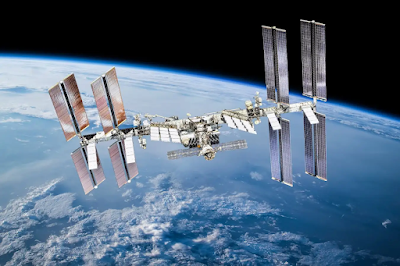
Bacteria on the space station are evolving for life in space


Image courtesy of Dima Zel/Shutterstock

Joel Kontinen

Can bacteria on board the International Space Station evolve new traits?

This is according to Darwinist believe that microbes can change into life giving things.  But only God can give life.

Bacteria on board the International Space Station (ISS) have evolved new traits in order to survive in low Earth orbit, and some show signs of increased virulence.

Microbes from Earth have made their way to the station via human hosts and the regular delivery of equipment and supplies.

NASA has been monitoring the ISS’s microbiome for a decade to understand how microbes survive in space conditions and what threat they might pose to astronauts.

Source:

James Woodford 2024. Bacteria on the space station are evolving for life in space | New Scientist 20 September. 


Wednesday, 7 July 2021

Microbes that feast on crushed rocks thrive in Antarctica's ice-covered lakes

 .


 Image courtesy of  John Priscu/University of Bristol.

Joel Kontinen


Microbes living in an  ice-covered lake in Antarctica are feasting on crushed rocks.  They are driving.

 According to evolutionists, this spells well for the search for life, This means extraterrestrial life that may be  . Underground lakes and frozen oceans are thought to be common in the universe, even in our own solar system.which was created by God  


Soucre:

Baker, Harry, 2021. Microbes that feast on crushed rocks thrive in Antarctica's ice-covered lakes Live Science 6 July.

Friday, 31 July 2020

Microbes That Went to Sleep 101.5 Years Ago Are Brought to Life


Image: courtesy of JAMSTEC, fair use doctrine.


Joel Kontinen 

Some microbes that scientist say have seen daylight since the time of the dinosaurs have just come alive. 

They were brought up “from 328 feet (100 meters) below the 20,000-foot-deep (6,000 m) bottom of the South Pacific Gyre. That's a region of the Pacific Ocean with very few nutrients and little oxygen available for life to survive on, and the researchers were looking for data on how microbes get along in such a remote part of the world.” 

They went to sleep 101,5 million years ago and now they are brought to life by scientists. 

The scientist were not sure what they would do. ”However, cells responded, many of them quickly. They quickly gobbled up nitrogen and carbon. Within 68 days, the total cell count had quadrupled from the original 6,986. Aerobic bacteria — oxygen breathers — were the hardiest cells and most likely to wake up. These tiny organisms were surviving on just the tiny bubbles of air that make their way down into sediment over geologic timescales. It seems that the metabolic rate of aerobic bacteria is just slow enough to allow them to survive for such extended periods.” 

This is how evolution- believing scientist think they have brought these the single-celled organisms back to life that can’t be given a lifespan in that way.  

Source:
 
Letzter, Rafi. 2020. sleeping microbes wake up after 100 million years buried under the seafloor. Rafi Life science•  30 July. 

Monday, 15 October 2018

”75-Million-Year Old “Ocean Microbes Live Forever

<


Image courtesy of Eric Erb, Public domain.


Joel Kontinen


“Deep below the surface of the South Pacific Ocean, buried beneath 70 metres of seafloor sediment, there are microbes that may be about 75 million years old. These organisms are among the oldest known life forms on the planet, yet exactly how they manage to maintain their near-immortality has remained a mystery,” New Scientist tells us.

Now, New Scientist has found a formula to keep the microbes alive: “James Bradley, a geobiologist at the University of Southern California, and his colleagues think they have solved the puzzle: to stay alive, the microbes stay mostly dead.”

However, the formula proposed by New Scientist is off by a few million years.

Source:

Joel, Lucas. 2018. 75-million-year old ocean microbes live forever on almost zero energy. New Scientist (11 October).