Showing posts with label water. Show all posts

Sunday, 23 August 2026

Astronomers find water in the harsh environment near the Milky Way's black hole


Image credit: ESA/Webb, NASA & CSA, F. Peißker, J. Lu, F. Yusef-Zadeh, N. B. Sabha, C. Chin

Joel Kontinen

Astronomers detected dust and water surprisingly close to the Milky Way's central black hole, Sagittarius A*, offering a rare direct view of how evolved stars may behave in hostile settings. It is situated in the region around the star IRS 3 and  it is: 26,000 light-years from Earth.

This unprecedented view of the star IRS 3  shows that it is shedding an enormous amount of material, gas and dust to build a sprawling envelope around itself. Within that star's envelope, scientists detected traces of water.

Although astronomers have detected water near other stars before, this is the first time it's been found this close to the Milky Way's supermassive black hole, known as Sagittarius A*.

The observations, described Aug. 11 in the journal Astronomy & Astrophysics, show that even in the harsh conditions surrounding a galaxy's central region, aging stars like IRS 3 may still be quietly seeding their surroundings with dust. That challenges the assumption that galactic centers are too extreme for this process to happen at all.

"The detection of water is especially exciting because it shows that molecular material can survive in an environment dominated by intense radiation," study co-author Macarena Garcia Marin, a researcher at the European Space Agency, said..

Genesis, the book that explains the origin of the universe says that there is water everywhere in the galaxy, so it is not difficult to find water there.  

 Source:

Shreejaya Karantha 2026 Astronomers find water in the harsh environment near the Milky Way's black hole — Space photo of the week | Live Science 21 August 


Friday, 19 June 2026

Gas from Uranus reveals it has an icy centre


Image courtesy of JPL/NAS

Joel Kontinen

Carbon monoxide in Uranus's deep atmosphere in dictates that the planet contains more ice than rock, suggesting it formed more like Neptune than we thought.

It  seems that  Uranus has more water than scientist taught, but it is inside the planet.  Genesis seems to indicate that all planets had water in them.

Uranus appears to have far more water frozen as ice in its interior than astronomers thought, potentially settling a long-runnig mystery about whether it formed differently to its closest neighbour, Neptune.

Ice giants like Uranus and Neptune have thick, gassy atmospheres. This makes it hard to know what is inside the planets’ interiors or how they formed. Scientists can, however, measure gases in their atmospheres, which they can then link to processes and elements deeper inside.

Carbon monoxide in a planet’s atmosphere is often associated with its deepest parts being rich in water or ice, but while neighbouring Neptune has displayed abundant carbon monoxide suggestive of an ice-rich centre, Uranus has been lacking, which has led some astronomers to argue it instead has a rocky interior. If true, this would mean that Neptune and Uranus formed in very different ways and aren’t as similar as they appear

Source:

Alex Wilkins 2026 Gas from Uranus reveals it has an icy centre | New Scientist 19 June 


Wednesday, 18 March 2026

3I/ATLAS: Interstellar comet has water unlike any in our solar system


The levels of a heavy form of hydrogen in 3I/ATLAS are 30 to 40 times higher than in Earth's oceans, suggesting the comet has a cold and distant origin. Image courtesy of International Gemini Observatory/NOIRLab/NSF/AURA/B. Bolin.

Joel Kontinen

The presence of water does not mean that this comet is teeming with life. It needs intelligent design to make water and other ingredients turn into life.

The interstellar comet 3I/ATLAS contains water and carbon molecules at levels never before seen in our solar system. This suggests that it formed around an alien star radically different from and much older than the sun.

Astronomers have been tracking 3I/ATLAS since it entered our solar system last year – and it is weird. It appears to be packed with far more carbon dioxide and water than almost any other comet we have seen, and early estimates put its age at 8 billion years – almost twice as old as the sun.

Martin Cordiner at NASA’s Goddard Space Flight Center in Maryland and his colleagues have found that its levels of deuterium – a form of hydrogen with an extra neutron – are at least 10 times higher than in any comet we have seen before.

Source:

Alex Wilkins 2026 3I/ATLAS: Interstellar comet has water unlike any in our solar system | New Scientist 17 March 


Friday, 14 November 2025

Caves carved by water on Mars may hold signs of past life


Image courtesy of NASA’s Mars Global Surveyor

Joel Kontinen

Evolutionists suppose that there might be traces of past life on Mars. They found in traces of channels that might speak of ancient life. However, life needs a creator to begin.

Caves carved by water that once flowed beneath Mars’s surface could have been ideal for life to thrive, if it once existed on the Red Planet, and they might still preserve traces of it today.

Mars is dotted with holes that look like cave entrances, but these are usually near regions that are suspected to have been volcanically active, which suggests they formed due to processes like underground lava flows, rather than the passage of water.

Source:

Alex Wilkins 2025 Caves carved by water on Mars may hold signs of past life | New Scientist 11 November 

Sunday, 14 September 2025

Incredibly exciting: NASA claims it's found the 'clearest sign' yet of past life on Mars


Image courtesy of NASA

 Joel Kontinen

NASA scientists have founds signs of past life on Mars. According to them, it was not a dead planet, as it is today.

Strange nodules of unusual minerals found on speckled rocks on Mars have offered more tantalizing clues that ancient life may have once thrived on the now-dead planet, NASA says.

According to NASA scientists, these features may result from non-biological processes occurring over millions of years. If evolution would be true, the evidence leads us to in a lake bed formation known as Bright Angel, it was crammed with organic compounds, had evidence that water once flowed through it.

 Source:

Ben Turner 2025 'Incredibly exciting': NASA claims it's found the 'clearest sign' yet of past life on Mars | Live Science September 10

Tuesday, 13 May 2025

Scientists find hint of hidden liquid water ocean deep below Mars' surface


Image courtesy of NASA Goddard).

Joel Kontinen

There might be a hidden ocean's worth of liquid water below the surface of Mars, seismic evidence suggests. By studying seismic waves, researchers have found a layer deep beneath the surface of Mars that could contain enough liquid water to flood the planet with an ocean thousands of feet deep.

NASA has found evidence of Mars' water escaping into space — but new research hints that it may have alssso gone deep, deep underground. 

 Could there be water on Mars, beneath the surface.  This is what some creation scientists believe, as in Genesis it says that planets were formed with water, inside them. For instance, minor planet Bennu is full of water.

Some evolution-believers scientists say that below the surface, some 5.4 to 8 kilometres or 3.4 to 5 miles, there is water beneath the surface.

Some evolutionists say that our neighbouring planet was once abundant in water. In the time between Mars' formation 4.1 billion years ago to about 3 billion years ago, the Red Planet is thought to have been extremely wet, with features like valley networks, delta formations, and layered sedimentary rocks suggesting sustained water flow.

Source:

Jess Thomson 2025 Hidden signs of liquid water ocean found deep below Mars' surface | Live Science 24 May

Sunday, 6 April 2025

The universe's water is billions of years older than scientists thought — and may be nearly as old as the Big Bang itself


Image courtesy of NASA

Joel Kontinen

When did life appear in the world? Scientists say that the appearance of water might say something about it.

“A new study suggests that water first appeared in the universe just a couple hundred million years after the Big Bang — meaning life could have evolved billions of years earlier than previously thought.”

Now some evolutionists say that humans came from ape like creatures and were moulded by Darwinian processes to become human They said that life may have appeared some 100 to 200 million years earlier that they  thought.

Water may have emerged in the universe far earlier than scientists thought — and it could mean that the life could be billions of years older too, new research suggests.

“Water is one of the most essential ingredients for life as we know it. But exactly when water first appeared has been a question of scientific interest for decades.”

Source:

Joanna Thompson 2025 The universe's water is billions of years older than scientists thought — and may be nearly as old as the Big Bang itself | Live Science 11 March


Wednesday, 11 December 2024

Earth may have had its water delivered by a vast cloud of vapour


Image courtesy of ESA/Hubble NASA, ESA, M.A. Garlick (space-art.co.uk), University of Warwick, and University of Cambridge.

Joel Kontinen

Rather than getting its water from impacts, our planet may have drawn in water vapour after the sun boiled it off early icy asteroids.

The sun may have created a vast mass of water gas by heating asteroids.

ESA/Hubble Copyright: NASA, ESA, M.A. Garlick (space-art.co.uk), University of Warwick, and University of Cambridge.

Where did Earth get its water? According to the Darwinian way, it got it from asteroids.  There is no proof of this, so it is just evolutionary speculation.

”A vast cloud of vapour expelled from boiled asteroids may have lingered in the solar system for millions of years before raining down on Earth, according to a new idea for how our planet got its water.

The origin of Earth’s water has long puzzled scientists. It is hard to argue that our planet has always had the water we see today, because the young sun would have been got its water from asteroids.”

But Genesis paints a different story, the Earth has always had water.

Source:

Alex Wilkins 2024 Earth may have had its water delivered by a vast cloud of vapour | New Scientist 11 December


Thursday, 13 June 2024

Water on Mars


Image courtesy of NASA

Joel Kontinen

Mars is covered by water. This is the conclusion of scientists who studied the volcanoes of the solar system.  They said that water frost has been spotted atop Mars' gargantuan equatorial volcanoes for the first time — defying previous beliefs that the presence of water there was impossible.

“Scientists spotted a hair-thin dusting of frost atop the peaks of the svolcanoes in the Tharsis region of the Red Planet he Red Planet — the largest mountains in the solar system, which tower up to three times the height of Mount Everest. In colder months, the frost could consist of up to 150,000 tons of water, or the equivalent of 60 Olympic swimming pools. “

When God created the solar system, He saw that water was everywhere, including planets and even moons.

Source:  

Ben Turner, 2024. 'At least 150,000 tons' of water frost discovered atop Mars' tallest volcanoes (msn.com) 12 June

Sunday, 18 December 2022

Watery Exoplanets


Image
courtesy of NASA, ESA, Leah Hustak (STScI). 


Joel Kontinen

Two strange planets 218 light years away from us may be completely coveredin oceans 500 times deeper than Earth’s. While the planets do not have life, Evolutionist are eager that some  of them will may be scattered in the universe.  

Researchers think that these planets Kepler-138 c and d are relative close to their sun and thus have “dense atmospheres of steam. Beneath the atmosphere, temperatures are expected toreach beyond 200°C and pressures would be at least 100 times the surface pressure on Earth.. ”


Source:  

Leah, Crane. 2022.    Twin planets orbiting a distant star may be half water, New Scientist 15 December

Thursday, 20 January 2022

According to evolution, Mars may have had a liquid water ocean 3 billion years ago


Image courtesy of NASA / USGS / ESA / DLR / FU Berlin (G. Neukum).

Joel Kontinen

According to evolution, Mars may have had a liquid water ocean 3 billion years agoThe research shows that there is strong geological evidence that Mars once had an ocean, such as ancient shorelines/

“Now, Frédéric Schmidt at the University of Paris-Saclay in France and his colleagues have found that a liquid ocean could have existed with an above water temperature of just below freezing. In this scenario, the ocean is kept warm enough to remain liquid by water circulation that could give it a temperature of around 4.5°C. “

This history of the delta’s geology provides context for the rest of the mission and improves our understanding of Mars’ ancient climate.

Now, Science has included a story of how the discovery was made. They believe that water played a  mayor role in the red planet. 

One of the most interesting aspects of Perseverance’s work is choosing a selection of rocks that might contain traces of ancient life and preparing them for a return journey to Earth”  “

And it is” choosing a selection of rocks that might contain traces of ancient life and preparing them for a return journey to Earth."

God created Earth to teem with various kinds of life, but as far as we know, there’s none on Mars.

Source:

Wilkins, Alex. 2022. Ancient Mars may have had a liquid ocean despite freezing temperatures New Scientist.  17 January. 


Wednesday, 12 January 2022

Uranus and Neptune may have a constant rain of diamonds


Image courtesy of Greg Stewart/SLAC National Accelerator Laboratory.

Joel Kontinen

Uranus, and Neptune may have a constant rain of diamonds. Uranus and Neptune are made mostly of water, ammonia and methane, so that the rain is not water.

But that does not endure liFe.

“The carbon then finds its brethren, forming long chains. The long chains then squeeze together to form crystalline patterns like diamonds.”

On the planets, the diamonds could presumably grow to be a lot larger than nano-sized.

“The dense diamond formations then drop through the layers of the mantle until it gets too hot, where they vaporize and float back up and repeat the cycle — hence the term ‘diamond rain’ ”

Source:

Sutter, Paul, 2022,  'Diamond rain' on Uranus and Neptune seems likely. Live Science, 11 January,

Saturday, 6 November 2021

Science thinks there was water on Mars


Image courtesy of NASA.


Joel Kontinen


NASA’s Perseverance roverR  landed in Jezero crater on Mars in February 2021. Earlier orbital images showed that the crater contains an ancient river delta that was deposited by water flowing into a lake billions of years ago.

Mangold et al. analyzed rover images taken shortly after landing that show distant cliff faces at the edge of the delta. The exposed stratigraphy and sizes of the boulders allowed them to determine the past lake level and water discharge rates. An initially steady flow transitioned into intermittent floods as the planet dried out.

This history of the delta’s geology provides context for the rest of the mission and improves our understanding of Mars’ ancient climate.

Now, Science has included a story of how the discovery was made. They belive that water played a  mayor role in the red planet. 

Source  

Smith. Keith T 2021. Martian Geology Perseverance images of a delta on Mars Science 7 October, 


Sunday, 31 October 2021

Phytoplankton are becomng scarce


Image courtesy of Uwe Kils, CC BY-SA 3.0,


Joel Kontinen

Phytoplankton are mostly microscopic, single-celled photosynthetic organisms that live suspended in water. Like land plants, they take up carbon dioxide, make carbohydrates using light energy, and release oxygen. They are what is known as primary producers of the ocean—the organisms that form the base of the food chain.

Now, phytoplankton are becoming scarce,

Despite their diminutive size they pay a key role in keeping our oceans healthy. They are created by God to keep are planet in shape


Suorce: 

2021. Phytoplankton Circulating in the sunlit ocean.

Tuesday, 27 October 2020

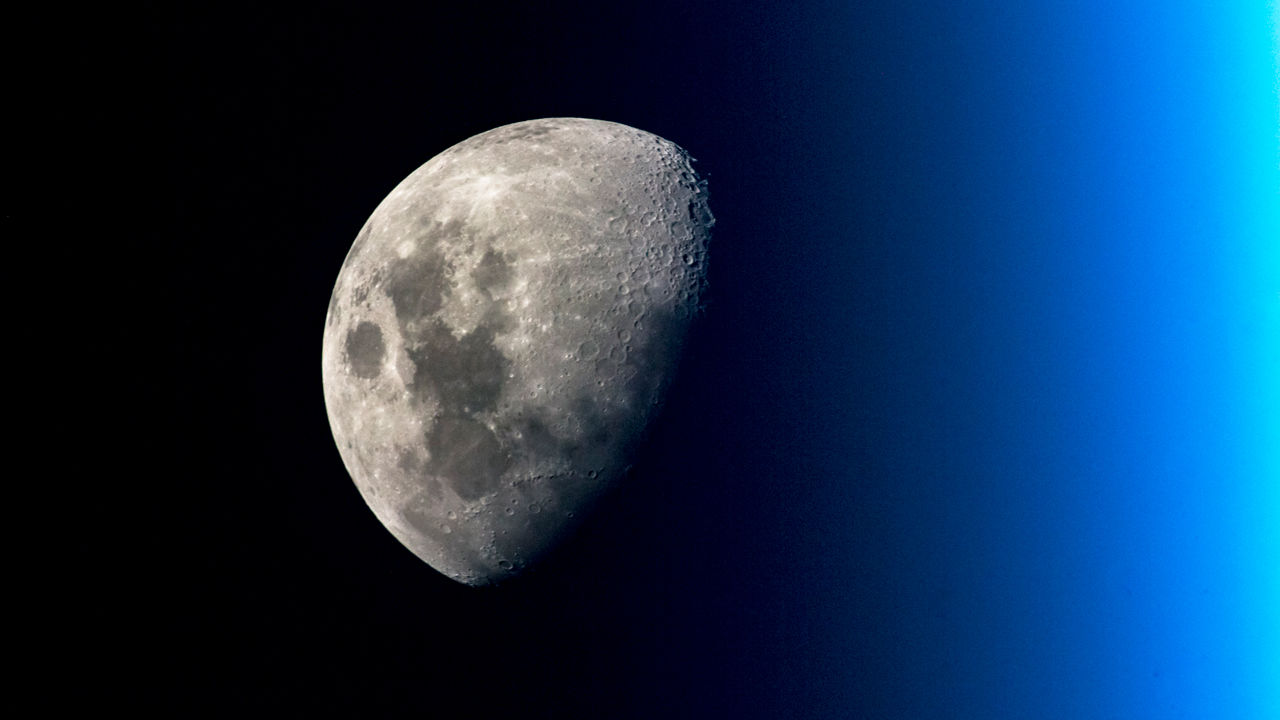
Water on the Moon


 Image courtesy of ESA/NASA.

Joel Kontinen


When NASA said that there was water on the Moon. Evolutionists said that during the Moon´s billions of years that was certain to happen, as our Moon is bombarded by thousands of meteorites, comets etc. They are taught to bring water.

But if the water had been there from the beginning, this would bring to light some creationist’s view of space being full of water.

However, the NASA will rerun to water to build a space station on the Moon  or to use it for travel to Mars.

Sourse:

Gill, Victoria. 2020.  Water on the Moon could sustain a lunar base.  BBC News 26 October.


Wednesday, 1 July 2020

Evolutionists Suppose that 36 Civilisation Wait for US.

Noelia12568 - Wikimedia Commons.


Joel Kontinen


The Hitchhiker’s Guide to the Galaxy may have declared that the answer to life, the universe, and everything is 42, but a team of astronomers has now revised that figure down to 36. More precisely, they say that among the several hundred billion stars in the Milky Way, there reside, roughly, three dozen civilizations advanced enough to communicate with us, the team reports today in The Astrophysical Journal. The scientists arrived at this number using the assumption that there is nothing special about our Solar System, and that another with a similar chemical makeup would also evolve advanced life in a similar span of time, The Guardian reports. The downside is that our nearest neighbour is likely to be 17,000 light-years away, making communication virtually impossible. Until, that is, we tune into Hitchhiker’s subether waveband.

Nonetheless, our solar system and our galaxy are special. they can harbour life.

Life does not occur when there's a lot of water. However, life has to be created.

Source:

Clery, Daniel. 2020. Three dozen alien civilizations may be advanced enough to communicate with us. Science 15 June.

Tuesday, 5 May 2020

How Water’s Chemistry Helps Make Life on Earth Possible


Image courtesy of Juhanson, CC BY-SA 3.0.


Joel Kontinen

Water is essential for our planet. Now, I see water that has just released from its ice --another feature for water it does not freeze from the bottom, but at the top,

On this video, Dr, Michael Denton tells us what water, how it is specially useful to us.

Source:

How Water’s Chemistry Helps Make Life on Earth Possible. Evolution News 2 May.


Friday, 9 August 2019

Israeli Gift to The Crises Caused by The Flint River

Watergen was found by Arye Kohavi. Image courtesy of LolaShuka, CC BY-SA 4.0.


Joel Kontinen

How to you do, when the water is bad?

"Entrepreneur and talk show host Armstrong Williams donated a Watergen atmospheric water generator to the Greater Flint Holy Temple in Flint, Michigan.

The Greater Holy Temple became a main water distribution site in January 2016 in response to the Flint water crisis.

Bishop Roger Jones, the pastor of the Greater Holy Temple, feels the greatest gift was not the machine but something much greater: hope.

The crisis began in 2014 after the drinking water source for the city was changed from Lake Huron and the Detroit River to a less costly source of the Flint River. Due to insufficient water treatment, lead leached from water pipes into the drinking water, exposing over 100,000 residents to elevated lead levels. A federal state of emergency was declared in January 2016 and Flint residents were instructed to use only bottled or filtered water for drinking, cooking, cleaning, and bathing
."

Now, however, the water is good and the Watergren apparatus is excellent.

Source:

Berkowitz, Adam Eliyahu. 2019. Israeli Company Ensures Church in Michigan Never Drinks Poisoned Water Again.

Friday, 11 January 2019

Citizen Scientists Spot an Exoplanet

Image courtesy of Francis Reddy/NASA's Goddard Space Flight Center, public domain.


Joel Kontinen


“The exoplanet, named K2-288Bb, could either be a rocky world like Earth or a gas-rich planet like Neptune.

The new world lies in a stellar system called K2-288, which includes two dim, cool M-type stars that are roughly 8.2 billion kilometers apart — about six times the distance between Saturn and the our Sun.

The brighter star of the pair is estimated to be half as large and massive as Earth's sun, while its dimmer companion is about one-third the sun's mass and size. This world lies 226 light-years from Earth, in the constellation Taurus K2-288Bb orbits this smaller and dimmer star every 31.3 days.

It resides within its host star's habitable zone, which means the planet may have liquid water on its surface. “

However, liquid water is not the only way way to look for life in the universe. One of the things that we should look for is Phosphorus, that is a chemical element with the symbol P.

Source:

Mathewson, Samantha. 2019. Distant, Possibly Habitable Planet Spotted by Citizen Scientist. Space. com (9 January).

Friday, 9 June 2017

Noah’s Flood: There Is Still Enough Water Beneath Our Feet to Flood the Entire Planet


Blue planet.


Joel Kontinen

Sceptics should probably stop questioning the source of the water that covered our entire planet during Noah’s days.

In 2014, research suggested that enormous amounts of water are hidden right beneath our feet, trapped in a mineral called ringwoodite.

A new paper published in the journal Science Advances confirms this discovery and proposes that there is almost as much water 410 to 660 kilometres beneath us than there is in the oceans.

There’s much water beneath our feet. Image courtesy of Jasperox, Creative Commons (CC BY 3.0).

And the water has been there for aeons: A recent study suggested that Earth makes its own water.

Modern science is finally catching up with Genesis: We now know that our extremely unique blue planet had water from the very beginning.

There’s watery evidence of Noah’s flood in many places, for instance under the Andes, in arid Northern Kenya and probably also in Greenland.

Source:

Coghlan, Andy. 2017. There’s as much water in Earth’s mantle as in all the oceans. New Scientist (7 June).